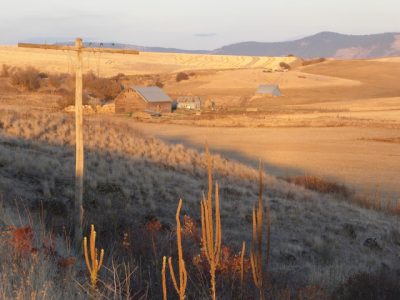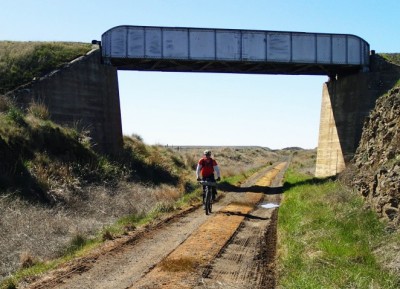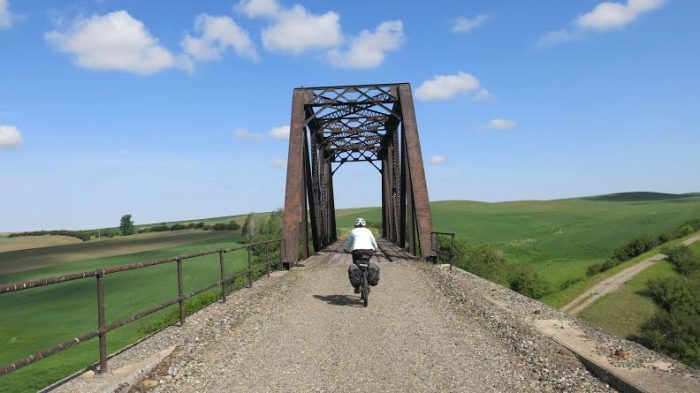
Marilyn Hedges on the John Wayne Pioneer Trail. Photo by Mike Sorensen (used by permission).
Not many people in Washington know about the Channeled Scablands, created 15,000 years ago by an epic glacial flood sending water the equivalent of the five Great Lakes through Eastern Washington.
Fewer people yet know that the longest cross state trail in the country, the John Wayne Pioneer Trail (JWPT), winds through the heart of the Channeled Scablands. The JWPT starts at Rattlesnake Lake, near North Bend, WA and continues for 285 miles to the Idaho border. In those 285 miles it crosses the Cascades, high desert country, the Scablands and eastern Washington’s Palouse. The JWPT, the former Milwaukee Railroad, is a rail to trail jewel in Washington State’s growing network of trails.
In the fall of 2015, 135 miles of the eastern section of the John Wayne Pioneer Trail was nearly given back to adjacent landowners — saved by a typo in the bill. This secretive attempt by Washington 9th District lawmakers to close the trail created a public outcry that led to three contentious public meetings and a series of Washington State Parks CAMP planning meetings.
These meetings started at the beginning of 2016, included meetings for public input and established an ongoing Citizens Advisory Committee with representatives from numerous stakeholders: weed control (important in eastern Washington), bicycling, hiking, equestrian, adjacent landowners, agribusiness, utilities, railroad history and tourism. The final meeting of the Advisory Committee was held in Moses Lake, WA on Monday, June 27, 2016. The proposed final Recommendations Report (a long term plan for the preservation, improvement and maintenance of the JWPT) was presented… but there was additional news!
Peter Herzog, Assistant Parks Director, and Daniel Farber, Parks Policy Director, introduced a (new) potential Washington Parks Policy Revision declaring that the Washington State Parks and Recreation Commission “Affirms its commitment to long-term development and operation of Washington’s cross-state trail system including the entire length of the Iron Horse State Park Trail Corridor (the JWPT) between Rattlesnake Lake and the Idaho border.” Further, “The commission authorizes the Director to work with private and public entities towards achieving the Legislature’s and the Commission’s shared vision of a Washington cross-state non-motorized recreational trail system extending from the Pacific Coast to the Idaho border and connecting to a national network of rail-trails.”
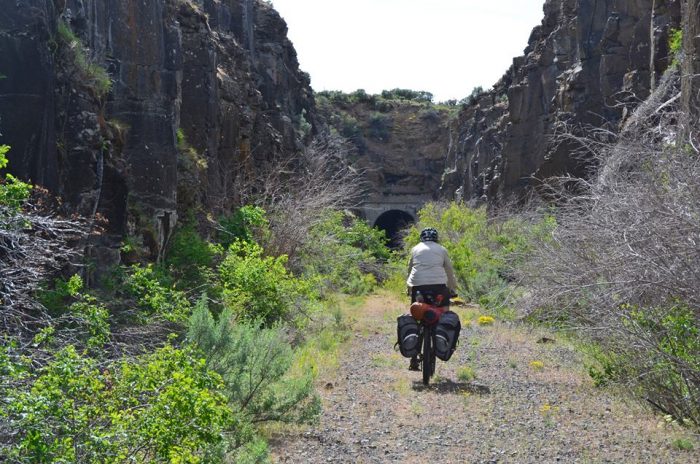
Riding toward the east portal of the Boylston Tunnel in the Yakima Training Center grounds. Photo by Mike Sorensen (used by permission).
Now, the potential future closure of the eastern JWPT is unlikely, potential funding for improvements to the eastern section of the JWPT is more likely, and the future of a system of rail-trails in Washington State may be one significant step closer to becoming a reality.
In addition to the potential change in policy for the JWPT and Washington rail-trails, Washington Parks is prepared to seek $6.2 million in capital and grant requests for the 2017-2018 biennium and an additional $11.3 million in future biennium requests. These funds will be used for repair and construction of JWPT trestles, bridges, the roadbed, access/camping/water facilities and more.
To be clear, these funds are yet to be awarded, but this is truly good news for the citizens of Washington State and for those who have worked so hard to save the JWPT and to bring the promise the JWPT holds to eastern communities like Beverly, Lind, Warden, Malden, Rosalia and Tekoa. Organizations like JWPT Wagons and Riders, Tekoa Trail and Trestle, Washington Bikes, Washington Trails Association, Cascade Rail Foundation, Pullman Chamber of Commerce and Friends of the JWPT have worked hard with Washington Parks to make this happen.
If you live in eastern Washington, or feel like a road trip, the next Washington Parks Commission meeting is July 21, 2016 at 700 Port Drive, Clarkston, WA from 9am – 5pm. The final Recommendation Report will be presented at this meeting. Among the recommendations for the JWPT is the likelihood that the trail name will change.
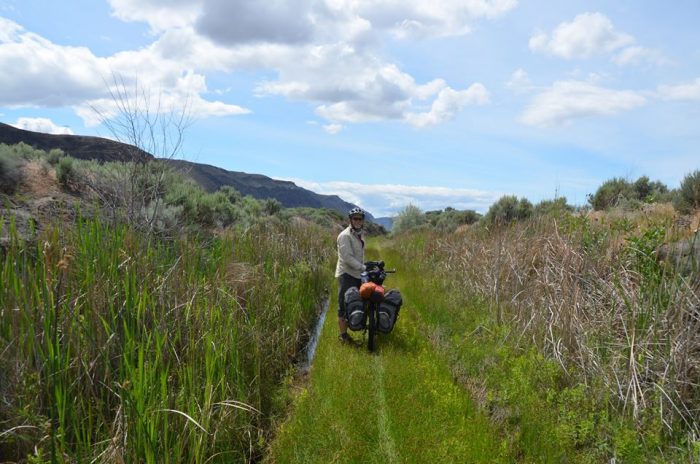
Mike Sorensen on the John Wayne Pioneer Trail near Lower Crab Creek. Photo by Marilyn Hedges (used by permission).
If you haven’t done so, put the JWPT on your bucket list to walk, mountain bike or horseback ride. You can get help in planning your trip by visiting the Friends of the John Wayne Pioneer Trail website.
- More on the Parks’ planning process
- Questions or comments can be directed to Randy Kline of Washington State Parks atrandy.kline@parks.wa.gov
Guest blogger Robert Yates serves on the board of Friends of the JWPT, a nonprofit organization.
 Chahim serves as Government Affairs Director for Forterra, where she is in charge of developing and advancing state and federal proposals aimed at creating livable, affordable communities and conserving working farms, forests and natural lands across the state. She serves on the boards of the Washington Association of Land Trusts and the Washington Wildlife and Recreation Coalition. She’s also a member of the International Living Future Institute’s inaugural Cascadia Congress and is an appointed member of the Forest Resources Coordinating Committee, a federal advisory committee to the Secretary of Agriculture. Leda holds degrees in Political Science and Conservation Biology from the University of Washington.
 Paul Dillon serves as the Public Affairs Manager for Planned Parenthood of Greater Washington and North Idaho. Previously he was the legislative assistant for Senator Andy Billig of the 3rd Legislative District of Spokane and co-founded an environmental news site published by the Spokesman-Review called Down To Earth. He was the board president for Pedals2People, a former community bike nonprofit in Spokane, and serves on the board of the Center For Justice. Dillon holds a bachelor’s degree from Eastern Washington University.
 Hague served on the King County Council 1993-2015. Prior to joining the Council she served as the Manager of Records and Elections for King County, and was an elected member of the Bellevue City Council. She has served on the King County Boys and Girls Club Board of Directors, was elected President of the National Association of Counties, and was one of the founding members of the board for Sound Transit.
 Keller is co-founder and co-owner of Peddler Brewing Company in Ballard, which opened its doors in 2013. A graduate of the Cascade Bicycle Club Advocacy Leadership Institute, she is a leader in the Connect Ballard neighborhood advocacy team and continually seeks ways for Peddler Brewing Company to support the bicycle community. Keller received her BS in Mathematics and Master in Teaching from Seattle University and taught math at Lake Washington High School in Kirkland.
 Founder and CEO of development firm Sher Partners, Sher devotes considerable time and energy to creating community gathering spaces. He owns Third Place Books, with locations in Lake Forest Park, Ravenna, and Seward Park. He redeveloped the Crossroads Shopping Center and developed other retail properties. He holds a PhD in agricultural economics from Washington State University, serves on the
  Daniel Weise is an ex-academic (PhD MIT, Assistant Professor at Stanford University, Microsoft Research group leader) who, for the last decade, has been a community volunteer. He serves on the boards of several nonprofits (including Climate Solutions and the Washington Environmental Council), on various other advisory panels and for-profit boards, and he assists technology start-ups. In his spare time he is a recreational cyclist, gardener of edible plants, and angel investor. His favorite investment, though he will probably never make a nickel from it, is the
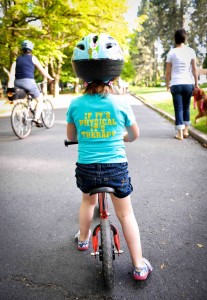 The Federal Highway Administration has once again ignored bicyclists when determining performance measures for our transportation system.
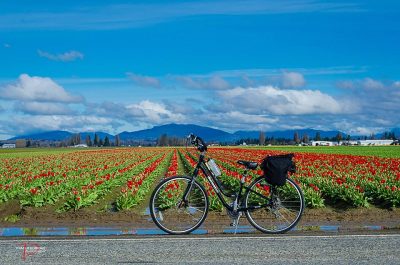 e need you to come out and be counted in Skagit County. Stand up for your belief in a county where it is safe for residents and visitors to walk and bike on county roads — to advocate for a county that has a transportation plan that considers all users and builds a network based on their plan.