Pancakes of Champions

Fall on Bike PathThis is a very serious bicycle advocacy blog. You’re here to hear about all the latest, hot-off-the-press advocacy news.

But why do you care about bike advocacy?

I’d bet my bottom dollar it’s because you’re a bicyclist.

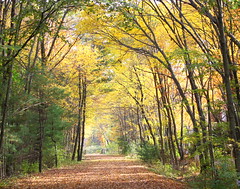
And if you’re a bicyclist, you probably share one of my interests: Food. That’s why I’m sharing this pancake recipe. I found it a while ago and found it makes delicious, heartier-than-normal pancakes that keep me riding for many miles (the picture shows some of the miles I rode fueled by these pancakes). It’s almost like oatmeal in pancake form — truly a cyclist’s dream breakfast.

Ingredients
1 C. milk
3/4 C. quick-cooking rolled oats (My note: I use a very grainy oatmeal called Vermont Morning for this – mmm, hearty, slightly crunchy still, all-round fabulous, delicious, and wonderful oatmeal for normal oatmeal eating, cookies, or in pancakes as described below)

3/4 C. all-purpose flour
2 tablespoons brown sugar
2 teaspoons baking powder
1/4 teaspoon salt
1/8 teaspoon baking soda

2 beaten eggs
1 tablespoon cooking oil

Instructions

  1. In small sauce pan, heat milk until warm. Stir in oats; turn the heat down to simmer or turn it off entirely and let stand, covered, for 5 minutes.
  2. Meanwhile, in a medium mixing bowl combine flour, brown sugar, baking powder, salt, and baking soda.
  3. After 5 minutes, stir the oat mixture into the flour mixture.
  4. In a separate container, stir together beaten eggs and cooking oil.
  5. Add the eggs and cooking oil all at once to the flour-oat mixture.
  6. Stir mixture just until blended but still slightly lumpy. Do not over-mix!
  7. Heat a griddle or pan on medium-low. For each pancake, pour about 1/4 C. of the batter onto a hot, lightly-greased griddle or heavy skillet and let spread to about 4-inch circle.
    My note: Sprinkle freshly-poured pancake with fresh or frozen berries, chocolate chips, sliced apples and walnuts, or other deliciousness to add a little more flavor.
  8. Cook pancakes until they are golden brown, turning to cook the second side when the pancakes have a bubbly surface and slightly dry edges. My note: these tend to burn easily. Cook slowly at medium-low or they will end up dark brown or burned rather than golden brown.

Serve with real maple syrup, buttered with powdered sugar, topped with fresh-sliced fruit or microwaved frozen fruit. I find just two of these pancakes gives me enough energy to ride 20 or 30 miles easily.

Cool any extra pancakes on a cookie cooling rack and store in a Ziploc baggie (refrigerated if > 1 day). You can even carry them in your back pocket for on-the-road nutrition. Reheat in the microwave or eat cold as a quick, hearty snack.

Yum.

Posted in Fuel, Sustainable Living | 1 Comment

Come Enjoy the New Month-End Work Party Hours!

Calling all helpers who work a normal 9 to 5 schedule!

Just for you, we have moved our always-popular Month-End Work Party, which features food, fellow cyclists, and lots of envelopes to stuff, to new hours!

The new Month-End Work Party hours are 4:00 pm to 7:00 pm.

This means that you can stop the Bicycle Alliance office by after work, hang out with your bicycling friends for a while, have a delicious and healthy snack, and improve bicycling for all Washingtonians by helping us get our monthly mailings out on time.

And, as if that isn’t enough, we’re adding another new feature to the Work Parties: Regular orientation for all new or interested helpers. If you’ve come a few times, or even lots of times, but want to learn more about the Bicycle Alliance’s mission, goals, and achievements, this is your opportunity. We also talk about what you get out of giving your time for us, and how we work to maintain the best possible environment for volunteers.

I look forward to seeing you all this evening!

Posted in Seattle, Volunteer | Comments Off on Come Enjoy the New Month-End Work Party Hours!

Does Nonprofit Mean no Payoff?


For two decades, Washington Bikes has been working diligently within the political system of our State legislature. Albeit keeping less than a celebrity profile, we have a lot of respected good results to show for our hard earned seat at the table within the Capitol. Yet, within the same time span, earning a seat and wielding influence seem to be mutually exclusive in the Seattle political realm .

The Seattle Times articleCongressman Dicks finds a way around earmarks rule” ( David Heath, Huffington Post Investigative Fund), shed a whole new light on the role of non-profits and how they garner political clout, which usually leads to securing funding for the projects and programs that support an organization’s mission.

The earmarks article provided me with a context for an experience I had recently at a gathering of environmental and advocacy non-profits. The keynote speaker was recently elected King County Executive Dow Constantine. His speech was purely straightforward support for the dedicated work of everyone in the room, and to honor two individuals who had dedicated their careers to fighting the good fight.

During the Q & A afterward, he answered a question about what non-profits could do better given this economy. Constantine’s response was aimed entirely at grassroots organizing: we needed our memberships to attend committee and public meetings, and to keep challenging the status quo as forcefully as possible to make our voice heard. I thought, I have heard many times that the definition of insanity is to keep doing the same thing over and over, expecting a different result.

In my opinion, I felt it was relevant to ask him then why, after years of partnering with local agencies and governing committees, the Bicycle Alliance might have succeeded in getting a seat, but our guidance at the Seattle and King County tables continues to be ignored (or at least filed away for reference). I wanted to hear how he thought we could get through whatever political barrier prevented real influence?

Along with some more “keep up the effort” comments, he closed his answer with a seemingly practical suggestion. Constantine said that the hard “reality” to accept for any 501(c)(3) nonprofit, was that they must consider becoming a 501(c)(4) nonprofit, capable of endorsing candidates. So as I would interpret it, if we need money or tax breaks for a product or program that only the Alliance can provide, where is a Congressman when you need one?

Case in point: I now have experience sitting at tables, contributing (I always assume this) on how to change the transportation infrastructure of Seattle for the better. The Alliance recently took over management of the former Bikestation—improving the amenities into a better resource for Seattle bicyclists—and reinvigorated the bicycle parking facility into BIKE PORT.
The strategy in taking over the facility was to establish an important bicycle infrastructure mandated by the Bicycle Master Plan, and in the process we would also create a viable model for replication anywhere in Seattle and Washington State.

Relatively speaking, I manage a Park and Ride (really a Ride & Park & Ride ) for bicycles. The facility was initially underwritten in 2003, and has since then been subsidized by Bicycle Alliance and its partners King County Metro , City of Seattle, and Sound Transit. And, as most auto drivers do not know or consider, Park & Rides or Transit Center car parking has always been a subsidized (not covered by your bus fare) project in any transportation planning. So despite community demands to create multi-modal transportation choices, the funding of this existing bicycle parking facility is always tenuous, and still a fraction of what automobile parking receives.

Sadly, our expertise and supporting data of the demand for secure bicycle parking is seemingly without any political muscle, and struggles to secure inclusion of secure parking into transportation planning, let alone to earmark future funding. Without funding, the ideal of modeling effective infrastructure, managing a lone BIKE PORT will drain the resources of the Alliance with a worst case example of mission creep.

Because of 501(c)(3) non-profit status, the Bicycle Alliance cannot officially endorse any political candidate. I cannot help but wonder whether secure bicycle parking like BIKE PORT would be more likely to get the funding it needs if the Alliance became a respected force to be reckoned with: not only with the power of lobbying in Olympia and protest actions, but with aggressive pro or con political campaigning.

Cascade Bicycle Club is very public about wanting to be a force to be reckoned with, and they created a separate 501(c)(4) within their organization to actively endorse candidates to their 12,000+ membership. They have the means, and in my opinion, had no other ethical choice but to recently team up with the Sierra Club and Futurewise to file a lawsuit against the Puget Sound Regional Council’s /Transportation Plan 2040. The thrust of the suit is what this blog post is about: that, many, many stakeholders including the Alliance submitted comments, and for all of the good guidance on the supposed goals of the plan, everyone’s input was seemingly ignored.

My question to our membership and allies is whether the Bicycle Alliance should become an organization that can endorse a Congressman that might earmark our agenda once they were elected? I would love to hear from the advocacy veterans on whether this strategy is how we want our work to pay off. Is lobbying more ethical? Should we stick to flash mob and email alert type actions to draw attention to the threats to our efforts and successes? How about press conferences to expose needlessly misguided policies and or a dissatisfaction with lack of progress?

Vote early, and vote often.

Posted in Funding/Policy, Politics | 3 Comments

How a Spokane Valley cyclist used social media to save a road safety project

Marc Mims of Spokane Valley had never been involved in local politics and admitted he couldn’t name the mayor or any of the city council members. But in May, when comments printed in the Valley Voice section of the Spokesman Review came up several times in conversation with fellow cyclists, he had to read them for himself.

Some citizens opposed to an already approved, funded and scheduled safety project on Broadway Avenue were speaking out, urging city council to scrap it. Known as a road diet, the project will reduce Broadway from 4 lanes to 3 (a travel lane in each direction with a continuous center turn lane), add bikes lanes and make upgrades to the sidewalk.

Marc wondered why there weren’t comments in favor of the safety improvements, so he recruited a fellow cyclist to attend the next city council meeting with him. He heard the all too often “Bikes don’t belong on the road.”  It was clear that political support for this project was waning.  Ironically, during this period of anti-bike rhetoric, Spokane Valley held its first Bike/Pedestrian Master Plan Workshop.

“It was clear that unless we could get citizens in support of the project to the final council meeting before the vote to suspend, we would likely lose this valuable project. So, I turned to Facebook, Twitter, and email—the social networking tools at my disposal,” recalled Marc.

After starting a Facebook page to save the Broadway Avenue safety project, Marc contacted bike advocates, members of local bike and racing clubs, bloggers, and cycling friends. He amassed nearly 100 “fans” on his Facebook page within a couple of weeks.  Washington Bikes and others dispatched action alerts, and posted info on our web site and to our Facebook page to reach Spokane area cyclists.

On June 29th, Marc and friends arrived at a packed city council meeting armed with facts. When it was time to comment, people lined up to speak about the Broadway Safety Project. Marc didn’t recognize many faces and he was worried.

“For. For. For… Although I didn’t know their faces, I recognized many of the names as ‘fans’ of our Facebook page,” Marc related.  “Thirteen of us spoke in favor and only one person spoke in opposition,” he added.

Then the vote to suspend was called: 2 in favor, 4 opposed. Victory! The project will move forward.

Marc is buoyed by his success and is now partnering with the Bicycle Alliance to organize a Pedal with the Politicians ride in Spokane Valley sometime in August.  Stay tuned for details.

Posted in Advocacy, Infrastructure, People, Safety, Spokane County | 7 Comments

Turn Right at the Fork in the Road

A couple years ago I was driving my bike to work with my daughter on the trail-a-bike. We turned left and nearly ran into a fork in the road. Someone, perhaps a drunk college student had put a fork in the road between some cracks so that it sat upright. It just so happens that there were some construction workers near that intersection so I biked by and told one “there’s a fork in the road back there, no really, someone put a fork in the road and it’s sticking straight up”!

We rode on laughing at the funny sight. I pass by that spot nearly every day on my commute to work,  and I can’t help but smile to myself when I remember the funny situation. My daughter will sometimes remark “remember when there was a fork in the road” and laugh out loud. Of course I’m laughing even harder since she has no idea that ‘fork in the road’ means something else.


Being closer and more in touch with the surrounding environment is one thing I love about being on a bike. Had I been in my car it is unlikely I would have seen the fork.

What is the funniest or most random thing you’ve seen while on a bike?

Posted in Commuting, Go By Bike, Humor | 3 Comments

Cyclists Make Drivers Uncomfortable

A Pemco Insurance poll has revealed what many of us already know—most motorists are uncomfortable driving around bicyclists and they do not understand the rules of road as they relate to biking. The Puget Sound Business Journal did a short piece on the Pemco poll last week.

Forty-two percent of the respondents described themselves as “somewhat uncomfortable” when bicyclists are present on the road while they are driving. Twenty percent said they are “very uncomfortable.”

Only 23 percent know that it’s legal for cyclists to ride two abreast in a traffic lane. Forty-eight percent responded “false.”

Over one-third of the respondents don’t know that it’s illegal for a cyclist to ride against traffic. Only 23 percent responded “false” (correct answer) to the statement, “Bicyclists can be ticketed for riding their bikes in a crosswalk.” Entire poll results are here.

“It’s good to have this data because it shows the need for education,” said Washington Bikes board member Eileen Hyatt of Spokane.

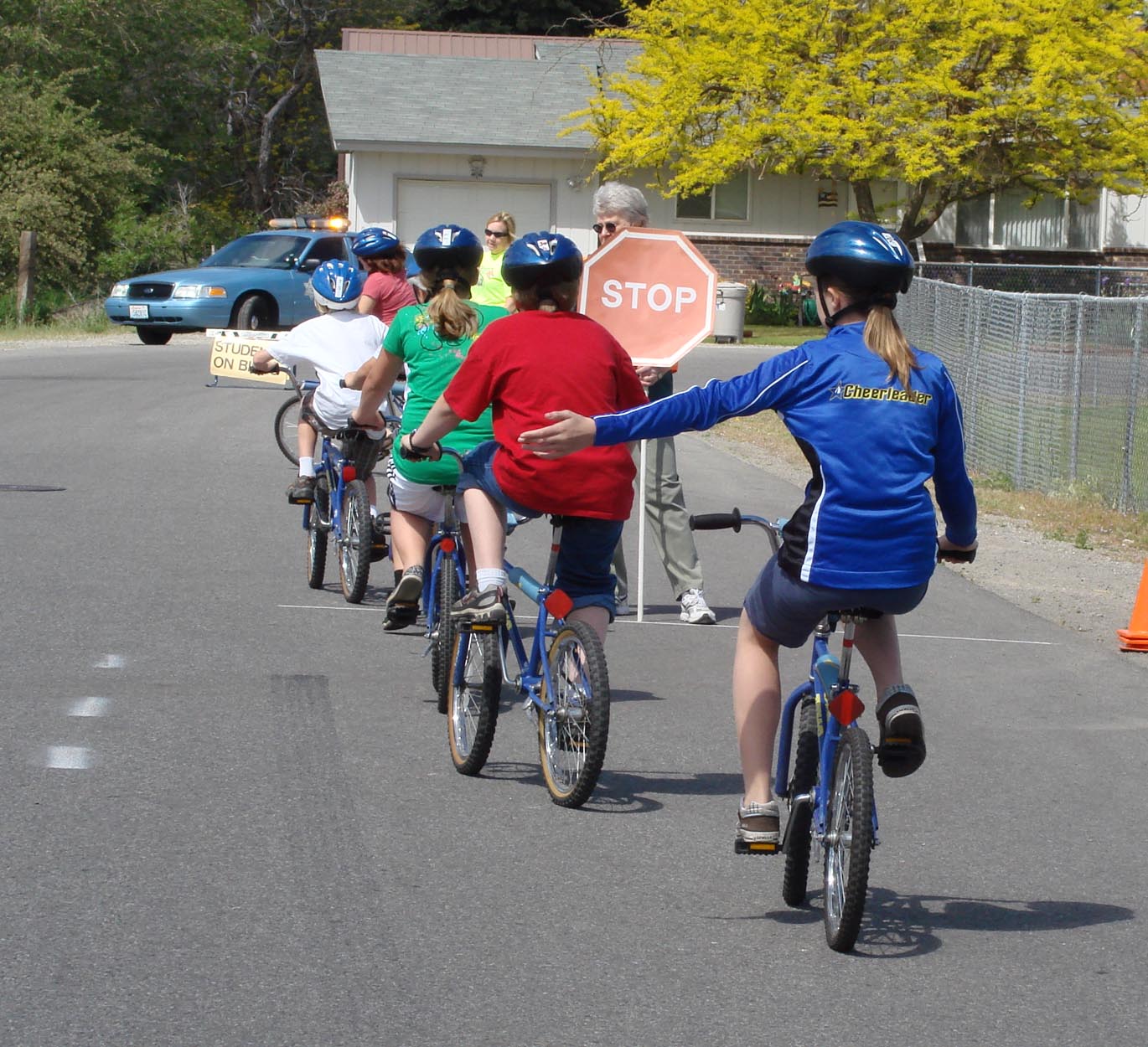
Hyatt is a retired teacher and League Certified Instructor who successfully brought bicycle safety education into school districts around Spokane. She is working with the Bicycle Alliance to expand this program into other schools around Washington State.

The Bicycle Alliance is also acting to educate motorists on how to safely share the road with bicyclists. Working with the Department of Licensing, we have successfully incorporated “share the road” curriculum in all drivers’ education courses. We distribute thousands of Motorists/Bicyclists Tips for Sharing the Road each year. We are now working with legislators to make it a requirement to include “share the road” curriculum in traffic school programs.

Is there a noteworthy skills training or Share the Road program in your community?

Is your community in need of a Share the Road campaign?

What else might be done to make all users of the road comfortable and tolerant of each other?

Posted in Education, Issues & Advocacy, Kids, Legal, Safety, Share the Road | 3 Comments

True or False?

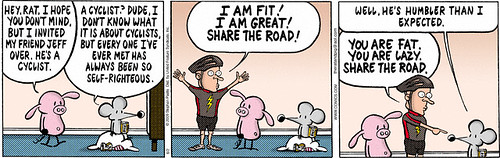
Pearls Before Swine Cyclist Comic

Every time I see this comic, I chuckle. Humor aside, though, I think it raises an interesting point. Is this how non-bicyclists view bicyclists? Do we, cyclists, deserve this reputation? What should we do to change this perception?

Posted in Attitudes | Comments Off on True or False?

Ahead of the Curve? Missouri County wants to ban bikes from roads

St Charles County, Missouri, lawmakers are considering a bill that would ban bicycles from certain two-lane highways in the county.  The effort is spearheaded by Councilman Joe Brazil, who claims this is the number one complaint he gets from his constituents. 

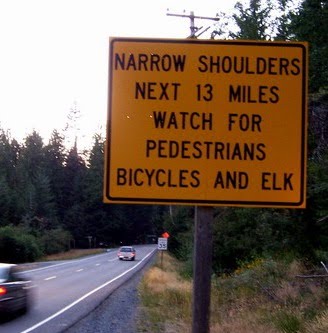
“There’s no shoulders.  There’s limited sight distance.  The speed limit’s 55 mph.  It’s very dangerous to be riding bicycles on these roads.  And you’re putting motorists in danger,”  Brazil was quoted in local TV coverage.  The bill is also supported by the parents of a teenaged motorist who was seriously injured when she swerved to avoid hitting a bicyclist.

Missouri Department of Transportation officials say the county doesn’t have the authority to ban bikes from state highways.  County council remains undeterred and plans to revisit the proposal in August.  Read more of the story.

Is St Charles County an anomaly or ahead of the curve?  Sadly, the casino town of Black Hawk, Colorado, has banned bike riding on almost every street in town and police started issuing tickets in June.  Here’s a report from the Denver PostBicycle Colorado is challenging the ban. This sort of knee-jerk reaction is in marked contrast to US Secretary of Transportation Ray LaHood’s support of complete streets and biking as transportation. 

Let’s ensure that forward and sensible minds prevail.  Speak up for bicycling in your community.  Thank your local officials when they support bicycling.  Contact the Washington Bikes when cycling is threatened in your community.

Posted in Attitudes, Issues & Advocacy, Legal, Safety, Share the Road, Transportation | Comments Off on Ahead of the Curve? Missouri County wants to ban bikes from roads

Transporting Valuables by Bike

This post isn’t about carrying computers, groceries, speakers or projectors, all of which I have trekked across town by bike. This is about something much more valuable–my daughter.

First ride, I promise she eventually stopped crying.

About 5.5 years ago my husband and I bought a Topeak child bike carrier. I went back and forth between a trailer and a seat that sits on the parents rear rack. When it came down to it I decided to get the seat for two reasons, one being money. We had about $100 to spend, I had been looking for used trailers for months to no avail. Reason number two was the bus. Thankfully I had the foresight to work that into the equation. The bike with the rear seat fit nicely on the bus rack, a trailer does not.

I happened to be at REI one day and saw the Topeak seat. I had a 20% off coupon and decided to go for it. It was $125, we eventually bought an additional rear rack for my husband’s bike at Fairhaven Bike and Ski for $40. We used that seat for 3 years, riding to daycare, the park, the store, and friends houses. Then one day a friend of mine said he’d sell me his Adams Trail a Bike.

I was ecstatic!  I had been wanting to buy one for awhile, but couldn’t afford it. The timing was perfect as Bike to Work and School Day was the following week. Izzie would often tell me how excited she was to be able to pedal with me. It wasn’t all fun and games though, we lived in a second story apartment so every morning and evening I had to haul both my bike and the trail a bike up and down the stairs. It was hard work, but worth it!!

The trail a bike worked great for us, we ended up using it through this spring. Even though Izzie could ride her own bike just fine, because she went to after school day care we couldn’t leave her bike at school.

One of the reasons I chose the YMCA summer camp is that the drop off location is only a few blocks from my work. I knew we’d be able to easily bike there. I was ready to take the leap and have her ride her own bike along side me to downtown Bellingham.

Eeks!

This is scary even for a seasoned commuter/bike advocate. She rides her bike around the neighborhood all the time, and has ridden to school, I knew she’d be fine. It would be about a 2 mile ride, partly on trails, partly with bike lanes, and one questionable spot. I planned out the route and we did it. It was great, and we ended up walking our bikes on the sidewalk for a short section
(busy street/intersection).

I often have parents ask me what age children can/should ride on their own bikes. Honestly the answer really depends on the kid. Parents know their kids best. How well can they handle their bikes, are they very comfortable and in control, or nervous and wobbly? Do they know the rules of the road? Some bicycle educators recommend that kids start riding on the street around age 8, others say 10. My daughter is 7 (8 in September). Depending on the street she is either on the sidewalk, with me riding to her left, in front of me, or we ride two abreast, with her to my right.

As hard as it is to see her grow up so fast, I am excited for this new phase in our bike commuting lives.

Posted in Commuting, Gear/Maintenance, Go By Bike, Kids, Whatcom County | 1 Comment

Pants or No Pants?

If you’re a bicyclist, you’ll know that excellent feeling of accomplishment when you wear the right clothes for the conditions. As a year-round commuter in Massachusetts and now Washington, I adopted the threadbare but still true axiom that there was no bad weather, just wrong clothing choices.

Here are a few examples of the types of weather I’ve ridden in.
Stupid Snow Defeat
Conditions: Sleet storms when icicles formed on my helmet, sheets of ice coated my arms and bike, and only my monster studded tires kept me upright. (The picture above shows a real snowy day I attempted to ride to work, but it took 20 minutes to ride 1 mile, and I had a 13-mile commute. Part of winning a battle is knowing when to retreat.)
Clothing: Long-sleeve wool jersey, Gore-Tex jacket, two layers of gloves, fluffy ear warmers, bike shorts, long bike pants with nylon fronts and warm fuzzy insides, two pairs of wool socks, Gore-Tex hiking boots.

Conditions: 10°F, sunny, with a 10-mph headwind, when people in cars wore heavy layers and I couldn’t keep my glasses from fogging up every time I paused.
Clothing: Too many layers to count, and still my fingers and toes had an alarming white look to them when I finally got to work.

Conditions: Steady, relentless rain and 45°F, with wind so gusty and nasty that I wasn’t sure I’d be able to keep my bike on the road.
Clothing: Gore-Tex jacket, thick non-waterproof pants, lightweight long-sleeve shirt and bike shorts; one pair of wool socks and booties.

Conditions: Flood water up to my axles, across roads so deep people in Explorers didn’t brave it.
Clothing: Bike shorts and jersey; summer-weight socks and clip-in shoes.

Conditions: Muggy 90°F temperatures that left my arms and legs slick with that nasty sweat-and-sunscreen that seems to have a La Brea tar pit-like fascination to tiny bugs.
Clothing: Bike shorts and jersey; summer-weight socks and clip-in shoes; sunblock.

Cape Cod Getaway 3
Of course, I’ve also ridden in innumerable beautiful days ranging from 30°F to 80°F — days where I’ve wondered, “Why would anybody choose to drive on a day this gorgeous?” (The picture at right shows me on my first-ever two-day ride, the MS Cape Cod Getaway in 2008, one of those delightful days when the weather cooperates perfectly.)

All this to say that, in general, I have a pretty good idea of what clothes work well in what conditions. Yet this morning, I completely misjudged the weather. Instead of having a comfortable ride in the rain, I arrived at work more than damp, having eschewed jacket and dry foot covering for an optimistic vest and sandals. Why, why, why (I asked myself) did I not wear a jacket? Because (I answered myself) it is JULY, and I shouldn’t still need my jacket and long pants.

Have you ever worn exactly the wrong clothes? What was your excuse rationale for choosing the wrong thing?

Posted in Commuting, Gear/Maintenance | 1 Comment