![]() |
| Photo by Carla Gramlich |
![]() |
| Photo by Carla Gramlich |
On Wednesday, May 2, friends and supporters of Washington Bikes will have the opportunity to support our important work through Seattle Foundation’s GiveBIG campaign. GiveBIG is a one day online charitable giving event to inspire people to give generously to nonprofit organizations who make our region a healthier and more vital place to live.
Each donation made to Bicycle Alliance between midnight and midnight (Pacific Time) on May 2, 2012, will receive a pro-rated portion of the matching funds (“stretch”) pool. The amount of the “stretch” depends on the size of the stretch pool and how much is raised in total donations on GiveBIG day. For example, if a nonprofit receives 3% of the total donations during GiveBIG, then it will receive 3% of the stretch pool.
Another exciting facet of the GiveBIG campaign is the Golden Ticket. Throughout GiveBIG, donors will be chosen at random to have an additional $1,000 given to the charity that received their donation. Golden Ticket winners will also be eligible to win airline tickets, gift cards, and more!
In order for your donation to qualify for the stretch pool and Golden Ticket, you must donate through Bicycle Alliance’s profile page on Seattle Foundation’s website. Anyone with an internet connection and a credit card can make a donation on GiveBIG day.
Keep in mind any donation Bicycle Alliance receives can be matched through an employer matching program and donors are encouraged to submit their donations to their employers for matching funds. Employer matches will not be applied in calculating the nonprofit’s share of the GiveBIG stretch pool.
So mark your calendar for Wednesday, May 2, and support Washington Bikes’s vital mission implementing bicycle education for kids and adults, improving bicyclist safety, advocating for better transportation options, and giving voice to bicyclists across the state. For 25 years we’ve worked to make Washington a more bicycle-friendly state where cycling is inclusive and accessible to everyone, from age 8 to 80.
Your dollars will allow us to expand our highly successful Safe Routes to School program and grow our statewide outreach program, Hub and Spoke, in addition to other community-enriching initiatives.
To learn more, visit GiveBIG’s FAQ page. We thank you in advance for your continued support!
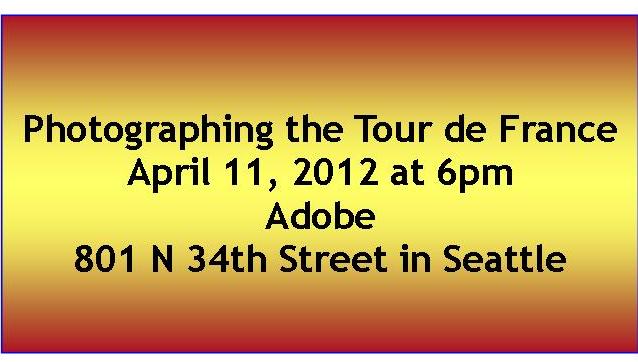
Join Washington Bikes on April 11 for an evening of Tour de France images with photographer Mike Hone. Mike has photographed the Tour de France for two years and will share his stories and insights of this venerable cycling event. Several of his photos have been featured on the cover of Road Magazine, Peloton, and Velo News.
Mike is an Experience Designer for Adobe Systems and an avid bicyclist. In addition to photographing the Tour de France, Mike is also an amateur Cat 1 racer and the owner/manager of the Audi Cycling Team.
A $5 donation at the door will benefit the Bicycle Alliance. Doors open at 5:30 and the presentation begins at 6:00. Beer, soda and snack will be available.
Special thanks to Adobe for hosting this event.
View Mike Hone’s Flickr photo stream.
![]() |
| pedbikeimages.org/T.Robins |
This marks the third year that Washington Bikes has conducted its Hub & Spoke outreach tour, so we decided to revamp the format a bit. In addition to the popular bicycle meet up format, we added a half-day workshop – Growing Biking and Walking in Your Community.
We launched the 2012 tour with a visit to Wenatchee in March. Community planners, school representatives, PTA members and citizen advocates joined us for the workshop. We reviewed the characteristics of a livable community, then honed in on what makes a place inviting to bicyclists and pedestrians. We examined challenges and how different solutions might be applied.
| Photo by Andy Goulding |
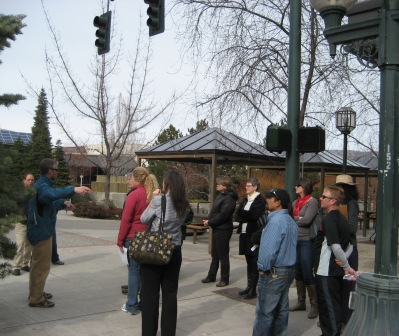
Patrick Walker, transportation planner for the Wenatchee Valley Transportation Council, led us on a walking tour of the business district. He showed us an awkward trail connection and we discussed ways to improve it. We looked at some challenging intersections and shared ideas on how to make them safer. Patrick also showed us the spot in downtown where Wenatchee’s first on street bike corral will be installed.
We returned to our meeting room and shared ideas for encouraging people to bike and walk more. These included Bike to Work Day, walking school buses for children, and open streets events. We wrapped up the workshop with a discussion of tools and resources that communities can use to grow biking and walking.
After the workshop, we gathered at the Saddle Rock Pub for a bicycle social hour. We were joined by members of the local bike club and bike advisory board, bike advocates, and members of the Transportation Improvement Board—who were holding a meeting nearby. Special thanks to Patrick Walker who helped us with logistics and planning for both events.
The Hub & Spoke tour continues with a visit to Vancouver in June. Stay tuned to our blog, website or social media channels for details.
Please send a letter to Secretary of Transportation Paula Hammond to request additional funding for the Hood Canal Bridge to make it SAFE for all users including bicyclists!
When the Hood Canal Bridge reopened in the summer of 2009, bicyclists from Squeaky Wheels, West Sound Cycling Club, and the Port Townsend Bicycle Association immediately identified serious safety issues with the bridge: the width and surface treatment of the plates placed over the metal grating, and gaps, joints and height variations betweeen the bridge sections. Those same cyclists notified and met with WSDOT representatives. In the first few months that the bridge was opened, several cyclists were seriously injuried.
As executive director of the Bicycle Alliance, I started working in early 2010 with those same bicycle advocates and we successfully allied with WSDOT to acquire $1.3 million to address the safety concerns identified. WSDOT then met with those organizations to discuss design proposals and material selection with the stated goal to retrofit the bridge during the 2012 construction season.
Unfortunately, according the WSDOT project engineer, the various options under consideration will likely exceed the $1.3 million allocated for this project. Instead the cost appears more likely in the $1.8 million range. WSDOT continues to “evaluate the options with WSDOT bridge designers and the evaluation has not changed” meaning this project needs more money to create a safe riding surface for bicyclists.
Because of WSDOT’s concern over the increased cost of the project and the uncertainty over the additional funding needed, design work on the project has stopped and will not resume until such time the project engineer is advised that more funding is available to complete this project.
As process requires, a project summary was submitted to the WSDOT Program Management group that oversees funding issues, and “requested guidance on the funding piece.” ASK Secretary Hammond to please make a determination that additional funding is warranted to fix the safety issues that were identified back in the summer of 2009.
Now is the time for WSDOT to fund the Hood Canal Bridge’s safety issues for bicycles before more cyclists are injured. Ask Secretary Hammond to:
Send your emails to Secretary Hammond before March 30th.
Paula Hammond, Secretary of Transportation: HammonP@wsdot.wa.gov
Jerry Lenzi, Chief Engineer, lenzijc@wsdot.wa.gov
David Dye, Chief Operations Officer, DyeD@wsdot.wa.gov
Kevin Dayton – Olympic Regional Administrator, daytonk@wsdot.wa.gov
cc Jeff Cook, Olympia Region, Bridge Project Engineer, cookjd@wsdot.wa.gov
Please also send your emails to elected officials in the 23rd and 24th Legislative Districts:
Christine.Rolfes@leg.wa.gov
Sherry.Appleton@leg.wa.gov
Drew@drewhansen.com
Steve.Tharinger@leg.wa.gov
Jim.Hargrove@leg.wa.gov
kevin.vandewege@leg.wa.gov
Thank you again for your support and good work to make the Bridge safe for all of us.
Tailwinds
![]() |
| John displays his CDC award. |
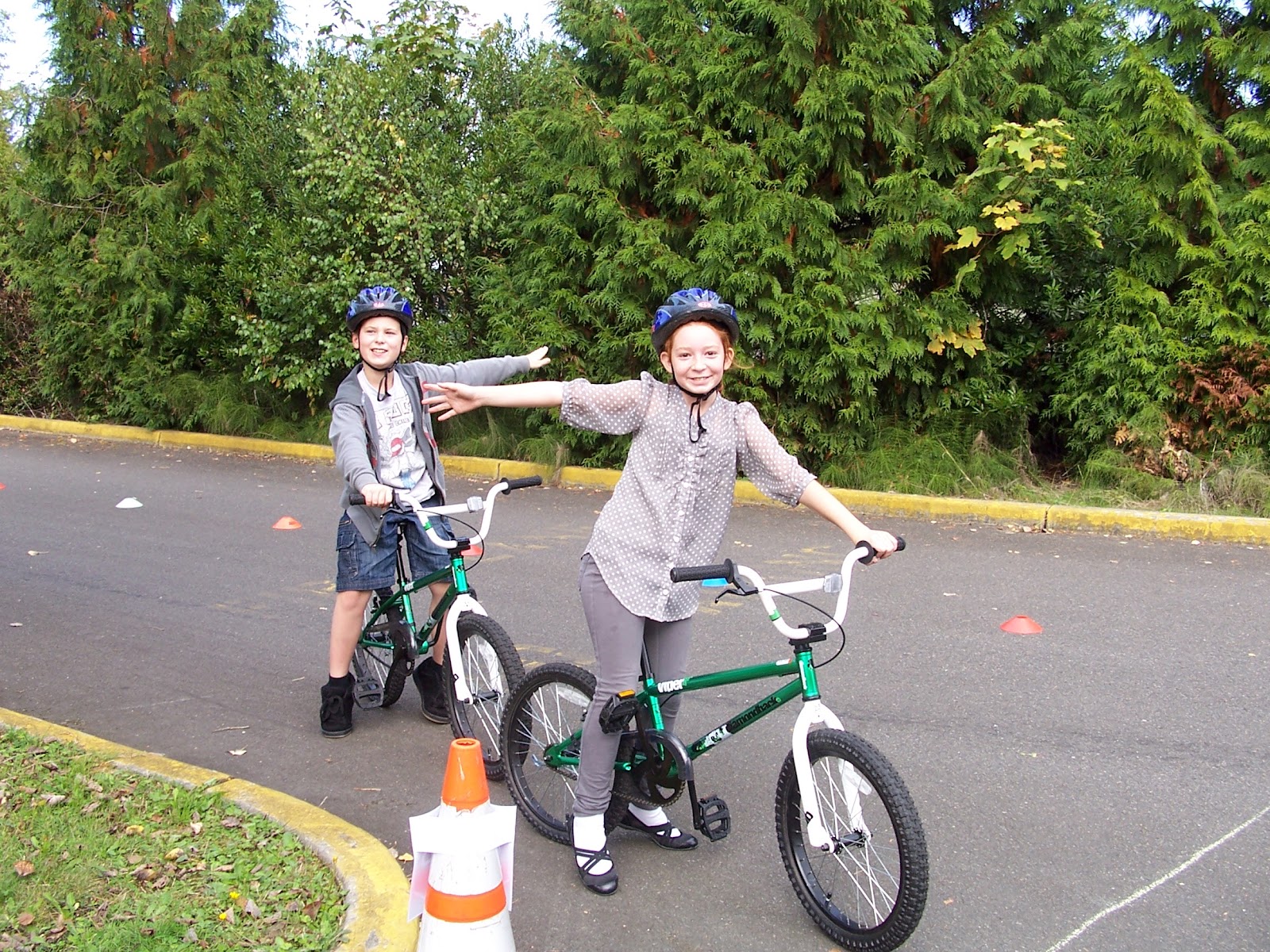
This month, our highly successful Communities Putting Prevention to Work (CPPW) Safe Routes to School project wraps up. Over 1500 low-income elementary school students received bicycle and pedestrian safety skills training at 17 schools in south King County as a result of this program. Sadly for us, this also means that project manager John Vander Sluis is moving on.
Today’s guest blog post was submitted by former Bicycle Alliance staffer Mark Canizaro, who lives carfree in Seattle. This post was originally published in 2009 on Mark’s personal blog.
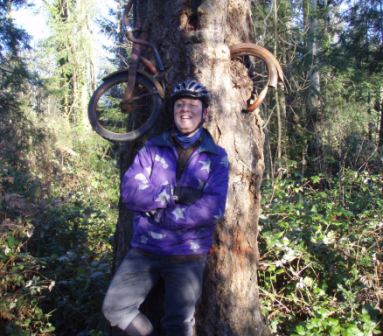
| Mark with the famous Vashon Island bike tree. |
It took a little extra effort, but I stayed with the group on the loop south and back around north on the beautiful rural West Side Highway. When we turned back north, Brad turned off to catch the ferry from the south point of the island. I was having a really great time but eventually it happened: I bonked. And it was a serious dropping-off-the-cliff bonk; one minute I was powering up the hill with these randonneurs and 4 minutes later I could barely the turn the cranks a flat half mile to the highway.
They waited for me. On the last hill up into town Mark rode up next to me, put his hand on the small of my back and just pushed me up the hill. I really don’t know how I would’ve made it otherwise. I was extremely thankful, but I could only grunt one word: “Milkshake”.
At the top of the hill Jon and Kent were standing there pointing to a sign on a quaint little local burger bar. The sign said: “Come in and eat or we’ll both starve!” Even forgetting the economy for a moment I found that to be very deep. It was advice that none of us could resist.
In addition to a garden burger and fries, I got my milkshake. It made me happy, but more importantly, it brought me back.
Once we were at the table stuffing our faces I explained why I believe milkshakes are the ultimate cycling food.
First of all it’s got fat. Fat is the oak log of energy. It burns slow and it burns long. This might not be so great if you’re sitting at a desk, in a car or on the couch, but it’s exactly what you want on the bike. It stays with you. For most people a milkshake will continue to fuel you for about 35 miles. For me it’s about 20, but I’m weird.
Second, it’s got sugar. Simple sucrose. This is the kindling, the fast burning twigs and paper of energy. It burns very quickly; you feel it almost instantly. (It goes away very fast too!) So if you’re starting to drag, it gives you power to sprint down the road, if you’re bonking, like I was, it restores you.
Third it’s got lactose which is a complex sugar, about half the way to a carbohydrate. It’s a medium burner, the dry pine log of energy, and will last longer than the sucrose.
And as the American Dairy council never misses a chance of telling us, milk has protein. Not only does that help restore overused muscles, but it helps to create the enzymes that regulate how quickly the energy, the glucose, is fed in to your bloodstream over time. It regulates your fuel flow.
Of course a milkshake also has fluids which you always need on the bike, no one ever drinks enough. And it’s easy and quick to consume, I’ve even carried them in my bottle cage! All of that is really important, but there are two other very important reasons why milkshakes are the ultimate bicycling food.
One, they taste good. This sounds basic, but it’s actually really key. I don’t know how many times I’ve seen folks, even some who were in the middle of a major bonk, holding on to a Power Bar, a gel, or some other gross non-food. But they weren’t eating it, they were staring at it, and that doesn’t fuel your body. So tasting good is great because you eat it: you actually consume it, probably quickly; and you finish it.
And lastly, you can find a milkshake almost anywhere. In the United States at least, every town, no matter how small, is going to have a restaurant, burger bar or establishment of some sort where you can get a milkshake, often a good one. Even between towns on the lonely roads there is often a possibility. This might be the most important feature. Showing up is 80%. If it’s not there, it can’t fuel you.
Milkshakes are great fuel, they are yummy and they show up.
The rest of the day I rode hard. I had half the milkshake at the burger bar and the other half went in my bottle cage for me to enjoy on the ferry. We rode until the shadows were long. It was a good day.
This week hundreds of advocates, interested citizens, business representatives, and local and state government staff from across the country will arrive in Washington DC for the League of American Bicyclists’ National Bike Summit. Washington Bikes’s Blake Trask and Josh Miller will be joining the Washington state delegation that includes our friends from REI, Raleigh, the University of Washington, Cascade Bicycle Club, as well as representatives from the Bicycle Alliance’s Legislative and Statewide Issues Committee.
| http://www.bikeleague.org |
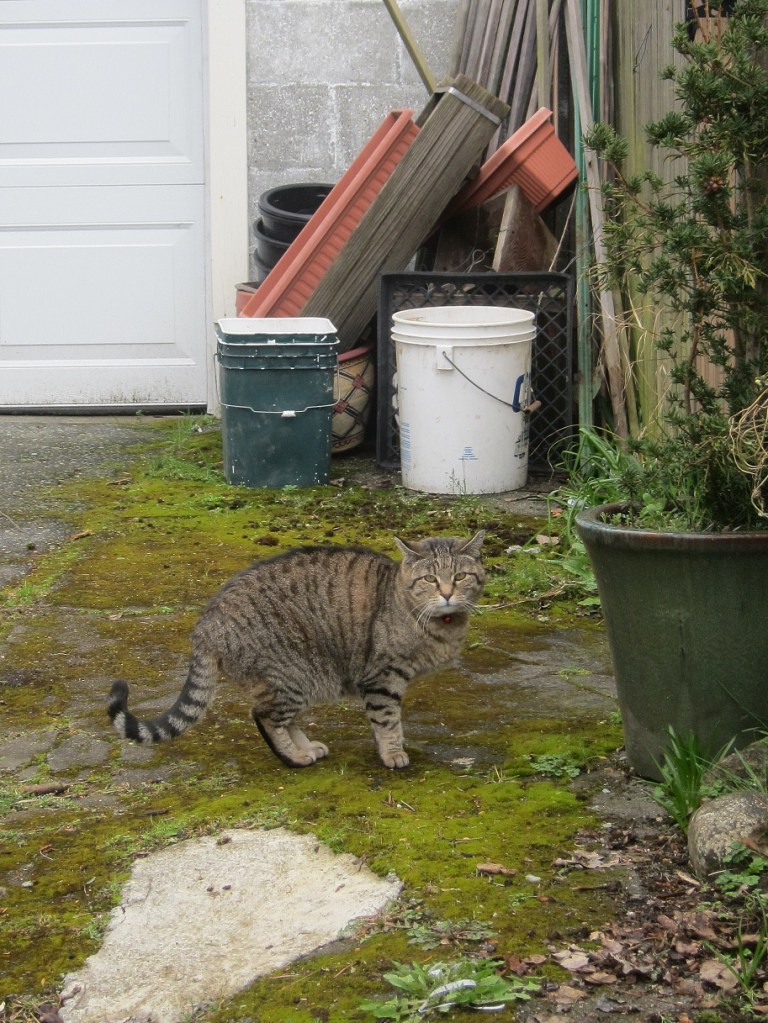
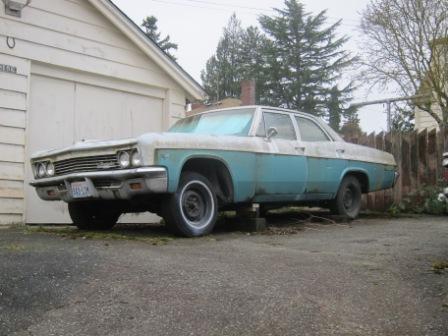
I’m an alley cat. I enjoy exploring alleys on foot and by bike—especially the ones in my neighborhood. They have their own unique character and roaming through alleys can give you a different perspective of your neighborhood. You can discover who among your neighbors likes to garden, barbecue, raise chickens, work on cars, and more—all by wandering through alleys.
I think of an alley as the route less traveled through my neighborhood. They often extend for many blocks. Alleys are great for foot and slow bike explorations because people seldom drive in them except to park their cars.
Some alleys are paved, some are not.
Alleys are a great place to store garbage cans, recycling bins and yard waste containers,
You might even find a Honey Bucket in an alley!
The alley side of a home is popular with gardeners. It’s possible to spot greenhouses, vegetable patches, raised herb beds, and flower gardens on an alley exploration. You might get lucky and spot the gardener in action as well.
Alleys function as active living spaces, especially for children, because vehicular traffic is at a minimum and travel at slow speeds. Children learn to ride their bikes and skateboards in alleys. It’s a place to practice your free throws, hula hoop, and have water gun battles.
When you need a break from it all, the alley might just be the perfect hangout.
The next time you head out for a neighborhood walk or bike ride, be sure to include an alley route or two. You’re sure to learn something new about your neighborhood. Maybe you’ll become an alley cat like me!
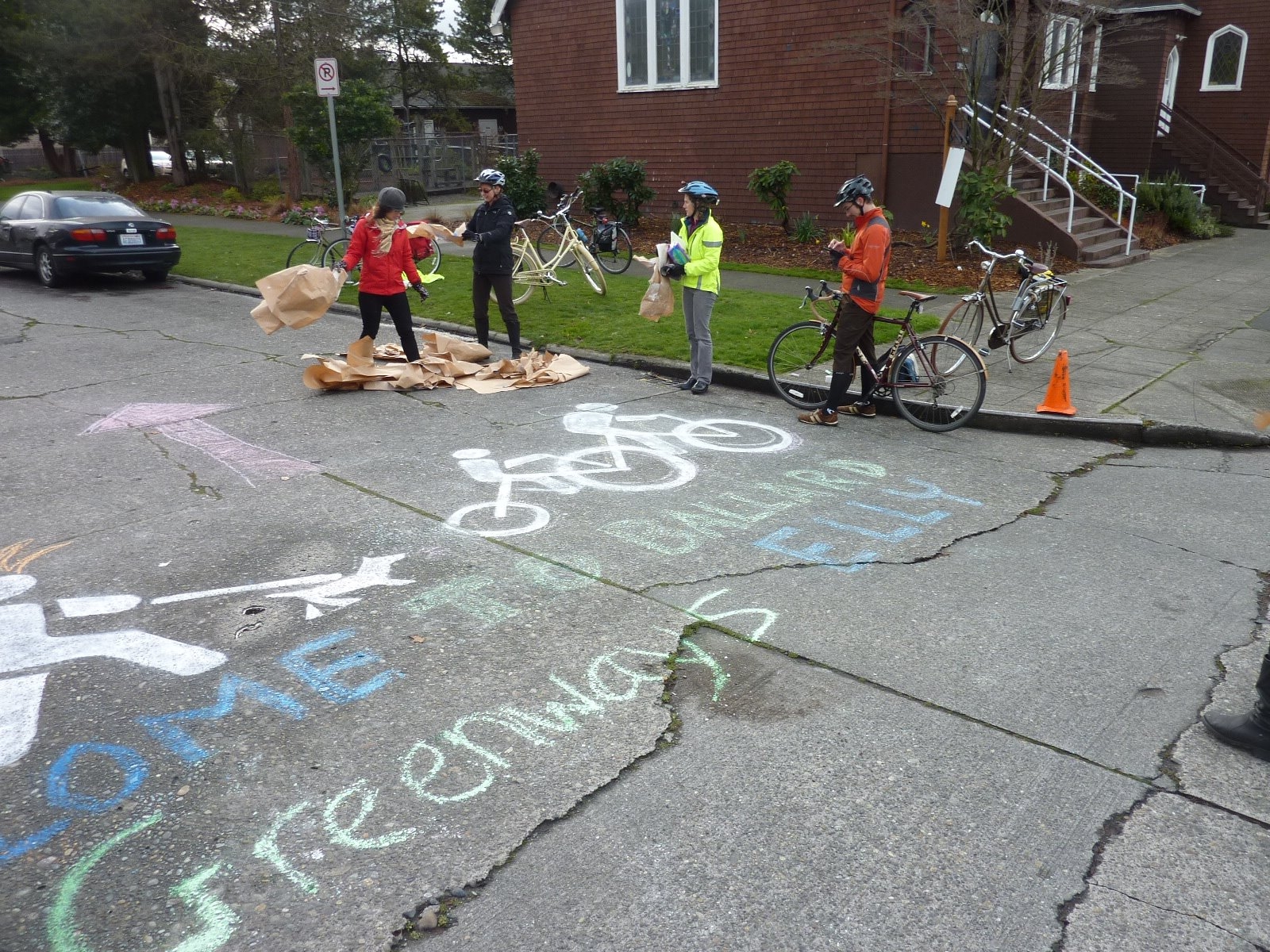
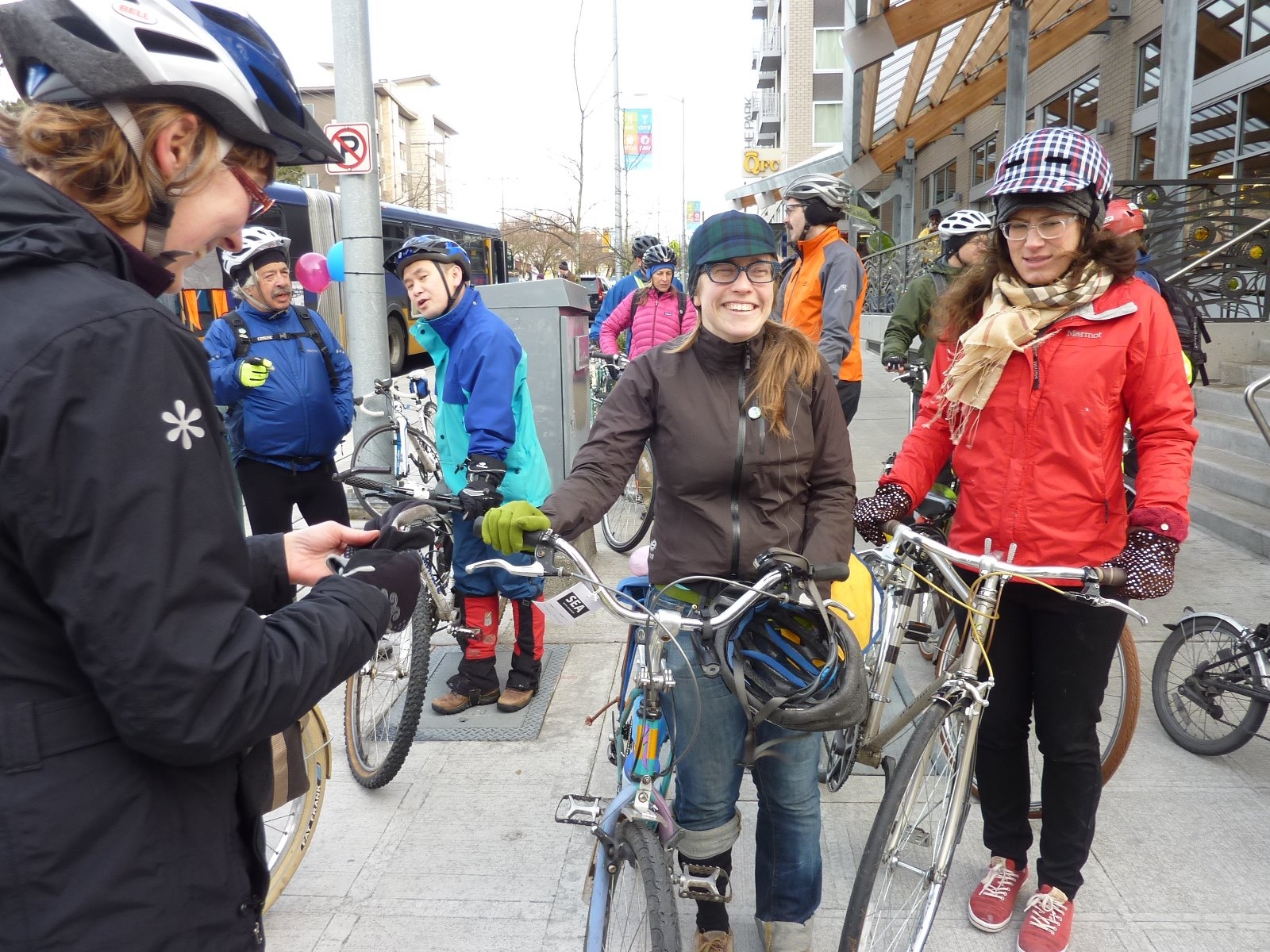
Our recap looks serious, but I think we were just thawing out still!
Also, mark your calendars for March 22nd! Seattle Greenways has organized a talk with Seattle Department of Transportation Director Peter Hahn, and newcomer Chief Traffic Engineer Dongho Chang. Join us for this opportunity to meet and personally thank Peter for creating a legacy of safer and more livable streets for our City — and to start a conversation with Peter and Dongho about how we can best leverage our community expertise and grassroots energy (which now spans hundreds of volunteers working across 13 neighborhoods!). Potluck is at 6:30 at Phinney Neighborhood Center. More information is on the Seattle Neighborhood Greenways Facebook page