Education: A Bicycling Cornerstone


Riding up 12th Avenue in Seattle one day, I came up behind a bicyclist who dodged in and out of the parking lane around parked cars. His path looked like a slalom course, zigging in towards the curb when no cars occupied the parking lane, and zagging back into the bike lane when parked cars forced him occupied the parking lane. From my perspective, the bicyclist appeared and disappeared from my path as if by magic. He was, frankly, completely unpredictable and therefore frightening.

The worst part is that this bicyclist thought he was doing the safe thing by staying as far from moving vehicles as possible, not even realizing that he risked being clocked by a turning car, an opening car door, or a faster-moving bicyclist who never saw him coming out of the parking lane.

Riding down Market Street toward downtown Kirkland, a bicyclist just ahead and to the right of me unexpectedly turned left without signaling, passing directly across my path of travel. He had assiduously eschewed a left-turn lane, favoring instead the going-straight lane that I had chosen for my straight-through path of travel. After I picked myself up off the ground, the bicyclist explained that his unexpected left turn, executed from the middle-right side of a straight lane, “avoided the bottleneck” created at the intersection where many cars choose to turn left.


The worst part is that the bicyclist thought he was doing the safe thing by staying as far from turning cars as possible, not even realizing that he was breaking the law and endangering himself and others by behaving unpredictably.

These are just two examples of choices I’ve seen cyclists make in the name of “safety” that actually endanger the bicyclist and, potentially, other road users. The two bicyclists in my vignettes didn’t realize that they needed further bicycling education, although their behavior indicated otherwise. As a previous post argued, individualized education is integral to increasing bicycling.

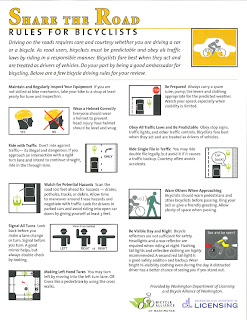
Even more, though, education is integral to increasing safe, predictable, legal behavior among current and future bicyclists. If we hope to achieve a truly courteous share-the-road culture in which many trips are made by bicycle, we must begin with bicyclist education. That’s why the Bicycle Alliance distributes Share the Road pamphlets (pictured) and why we have two new grants that focus specifically on education for children and adult bicyclists. We are working to create educated bicyclists who know how to use their bikes legally, safely, and predictably.

If that sounds like an exciting future to you, contact us to find out how you can help make it happen.

Edited 10/8/2010 to add: Let me give you some statistics to back up my anecdotal evidence. According to the League of American bicyclists,

  • 50% of all bike crashes are falls caused by the bicyclist all by herself — she hit a rock, her front wheel got stuck in a hole, her brake cable snapped, her shoelace got wrapped around the crank arm, etc. Therefore, the individual bicyclist can prevent the vast majority of these falls by taking simple precautions like doing the ABC Quick Check before a ride and practicing good bike handling skills.
  • 33% of crashes are caused by another bicyclist, a pedestrian, or an animal — something other than the bicyclist alone, but not a motor vehicle. Many of these crashes, too, can be prevented with good bike handling skills and by following laws and being predictable for pedestrians and other riders.
  • The remaining 17% of crashes are motorist-bicyclist crashes, and of those, half are caused by the motorist and the other half are caused by the bicyclist. That means you can reasonably eliminate almost half of all the causes of car-bicyclist collisions, too. Here’s a breakdown of fault and cause of crash in car-bicyclist collisions.
    Who is at Fault Action Causing Crash % of Crashes
    Bicyclist Wrong-way riding facing traffic 14%
    Bicyclist Left turn from right side of the road 11%
    Bicyclist Failure to yield from driveway* 9%
    Bicyclist Running a stop sign or signal 8%
    Bicyclist Swerving in front of a car 5%
    Motorist Left turn in front of bicyclist 13%
    Motorist Right turn in front of bicyclist 11%
    Motorist Running stop sign or signal 8%
    Motorist Opening a car door into path of bicyclist 7%
    Motorist Failure to yield from driveway 6%
    Motorist Didn’t see the bicyclist 3%

    * This is mostly small children.
    These statistics taken from the League of American Bicyclists Smart Cycling Traffic Skills 101 Student Manual, page 22.

    For more information on bike safety statistics, check out the compendium of links here or here.

As you can see, by being an educated bicyclist who has good bike handling skills and rides predictably and legally, you can eliminate almost 80% of the causes of crashes. This is why bicycle education is so important. It’s not just telling people to wear helmets, but providing them with the skills and knowledge to use bikes for transportation confidently, successfully, and safely.

Posted in Attitudes, Education, Go By Bike, Safety, Share the Road | 2 Comments

Can a simple conversation significantly increase the number of bicyclists on city streets?

We’ve all read about how bike lanes can increase the mode share of cyclists, but is building infrastructure the only way? If you build it, will they come? Will a non-cyclist start biking to work if a bike lane is installed near their home or work site? One would assume the answer is yes, otherwise there wouldn’t be so many bike lanes sprouting up around the nation. As someone who teaches beginner commuter classes, I have heard many times that new cyclists feel more comfortable on roads with bike lanes. I’m all for bike lanes, however, I’m going to look at another method of increasing the bicycle mode share, Individualized Marketing.

A typical marketing campaign may include posters, advertisements in papers
or radio, and may reach a small percentage of people. If I want to increase the number of cyclists in my community I could develop an ad campaign that shows local cyclists and hope that people see it and are inspired to bike themselves. If I’m lucky, they will also see my website and remember to check it out and read about beginning commuter classes. Individualized Marketing takes this approach a few steps, or leaps, further, by bringing the offer of bicycle education and assistance to their doorstep.

In July 2008 Whatcom Smart Trips contracted with SocialData to provide Individualized Marketing (IndiMarkTM) to1/3 of Bellingham households (10,037 homes or 22,500 people). People were contacted by mail and by phone and asked if they would like information about making more of their trips by walking, bicycling and public transportation. Contact was made with 89% of the households in the targeted area. Of those who contact was made, 45% responded that they were interested in learning more about how they could use sustainable transportation modes.

This is the group that received the individualized attention. An order form was mailed to their home from which they could choose a plethora of brochures and booklets that highlight bike, pedestrian and bus safety, as well as tips and techniques. People who were slow to complete their forms received encouraging follow-up phone calls, with the result that 90% of the group ordered and received materials. In addition to the educational materials on the order form, respondents could schedule a ‘bike buddy’ visit–a one-on-one meeting with an experienced cyclist who reviews bike safety, rules of the road, bike and helmet fit, and even helps plan out bike routes near the person’s home. The same can be done for bus riders as well.


Once the order form was received by SocialData, the requested materials were quickly delivered to the person’s home by bicycle. About a week or two after a delivery SocialData would contact the household to make sure they had received everything they wanted and answer any questions they might have. Households that participated in the 2008 IndiMark project received an average of four to five phone calls and/or visits. This high level of interaction sets IndiMark apart from standard direct mail campaigns, which typically achieve a 3-4% response rate.

So what are the results? Do all these phone calls and bike deliveries make a difference?
You bet! In Bellingham, we saw a 15% reduction in VMT (vehicle miles traveled), as well as an 11% increase in bus trips, a 22% increase in walking trips and a 35% increase in bicycle trips! This results in city-wide mode share of 12% walking, 6% bicycle, 1% motorcycle, 55% car as driver, 21% car as passenger, 4% bus, and 1% other public transportation. In the targeted area, the active transportation mode share is an amazing 20% walking and 11% bicycling!

So why is IndiMark so successful? I think the main reason is that humans respond to and like genuine interactions. Encouragement from a real human being takes the fear and the unknown out of change. Someone may want to ride their bike to work, but if they don’t know how to do it safely, or what the laws are, they have to do the research themselves. They may not even know where to start looking for that information. So if someone calls them and says, “Good afternoon, if you’re interested I’d like to send you some information on bike commuting”, the fear is eliminated and they are on track to start biking.

Another reason for the success of IndiMark is that the information provided is individualized and specific to their neighborhood. If a resident doesn’t know where the bus that stops on their street will take them, they are unlikely to use it; it isn’t even an option for them. But if they get a call and ask for information about the bus, they’ll receive a detailed summary of the bus options available to them in their neighborhood. The guesswork is gone; the bus and the bike are now options.


As I said earlier, bike lanes are great. However, adding infrastructure isn’t the only way to increase bicycling trips. Providing quality education is much more cost effective than a construction project. IndiMarkTM costs about $20 per person ($450,000 for 22,500 people). Compare that to a recent bike/ped improvement project that installed about 1800 feet of much needed sidewalks and bike lanes on a local Bellingham street for a cost of $710,000.

Now don’t get me wrong–this was an amazing project (it just so happens to be in my neighborhood, so I directly benefit from it). However, it’s unrealistic to expect the level of behavior change from that new facility as we achieved in the IndiMark project. The new facility will be used most likely only by people in that immediate neighborhood, whereas the IndiMark project reached a third of the City’s population. If communities are able to couple infrastructure projects with education we will all benefit and have safer, more livable places to reside.

Posted in Education, Go By Bike, Sustainable Living, Whatcom County | 5 Comments

The Bright Bicycling Future

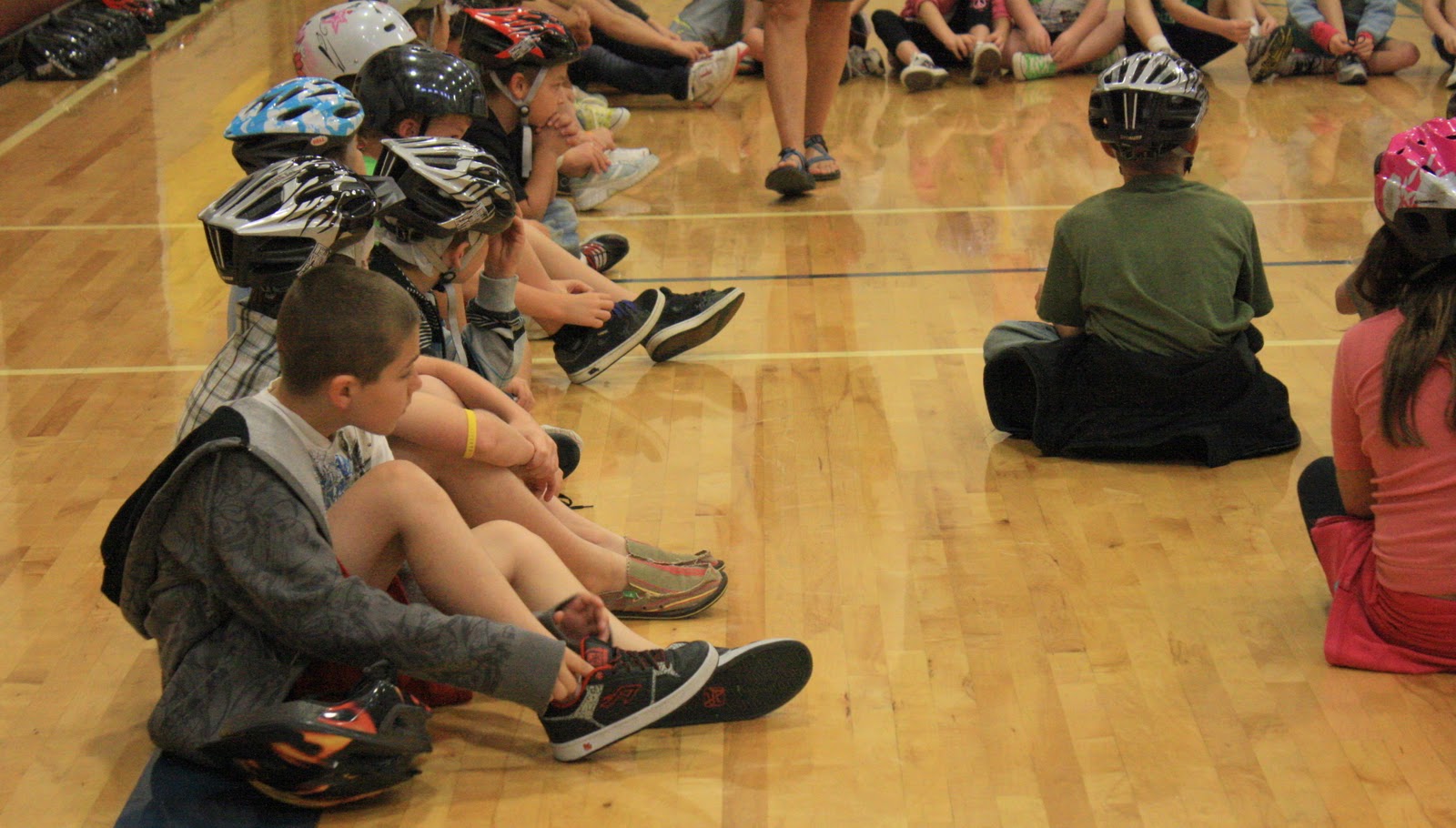
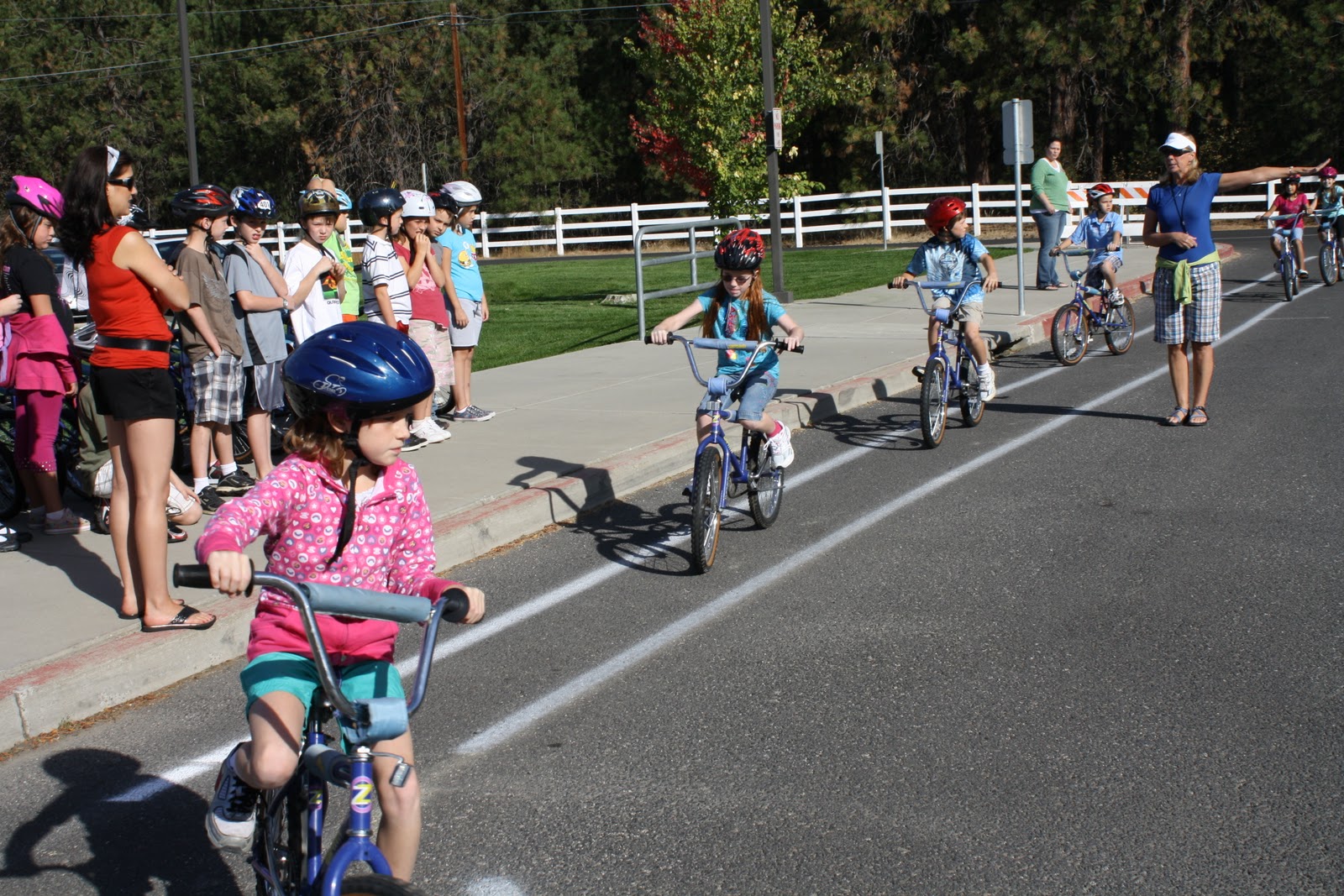
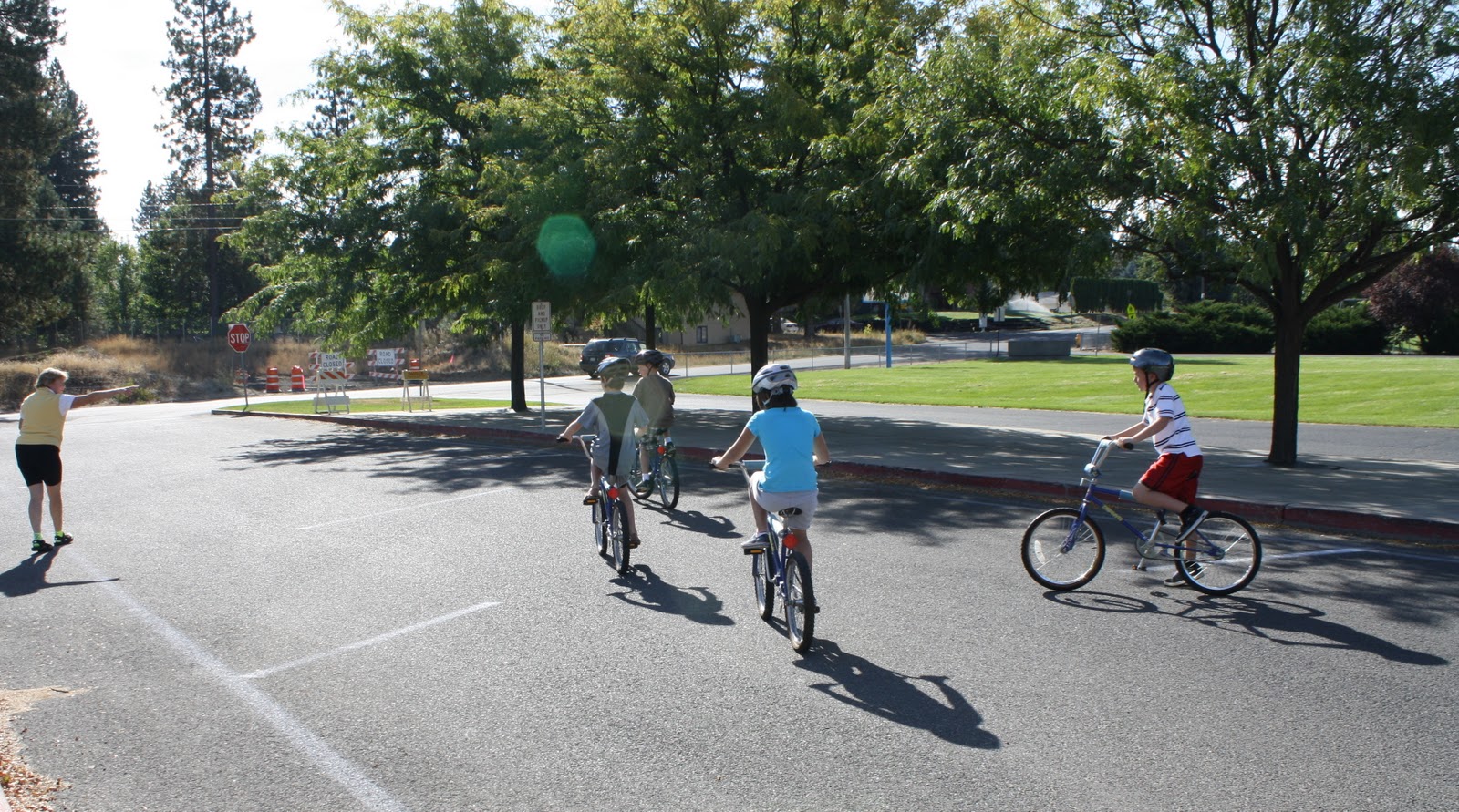
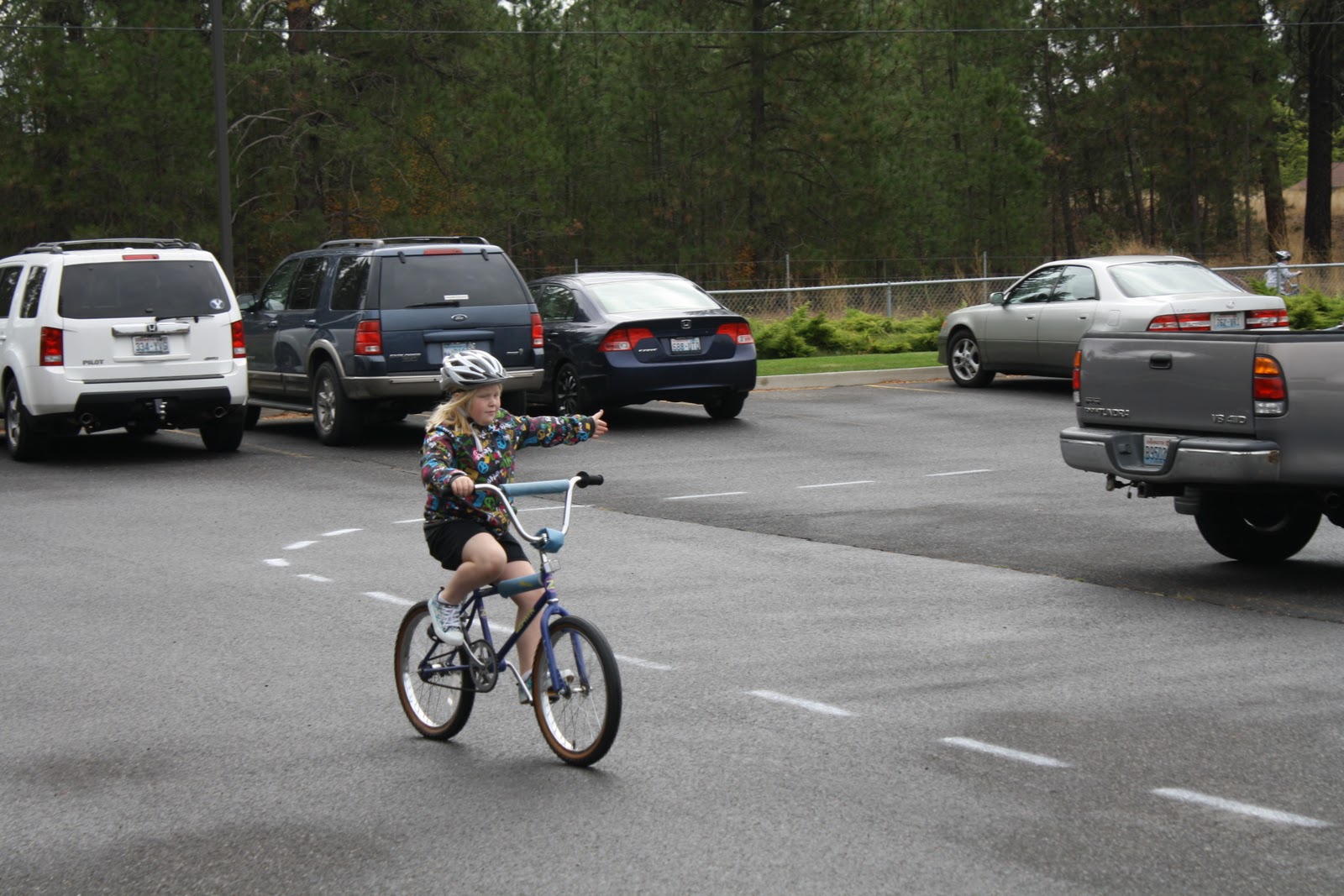
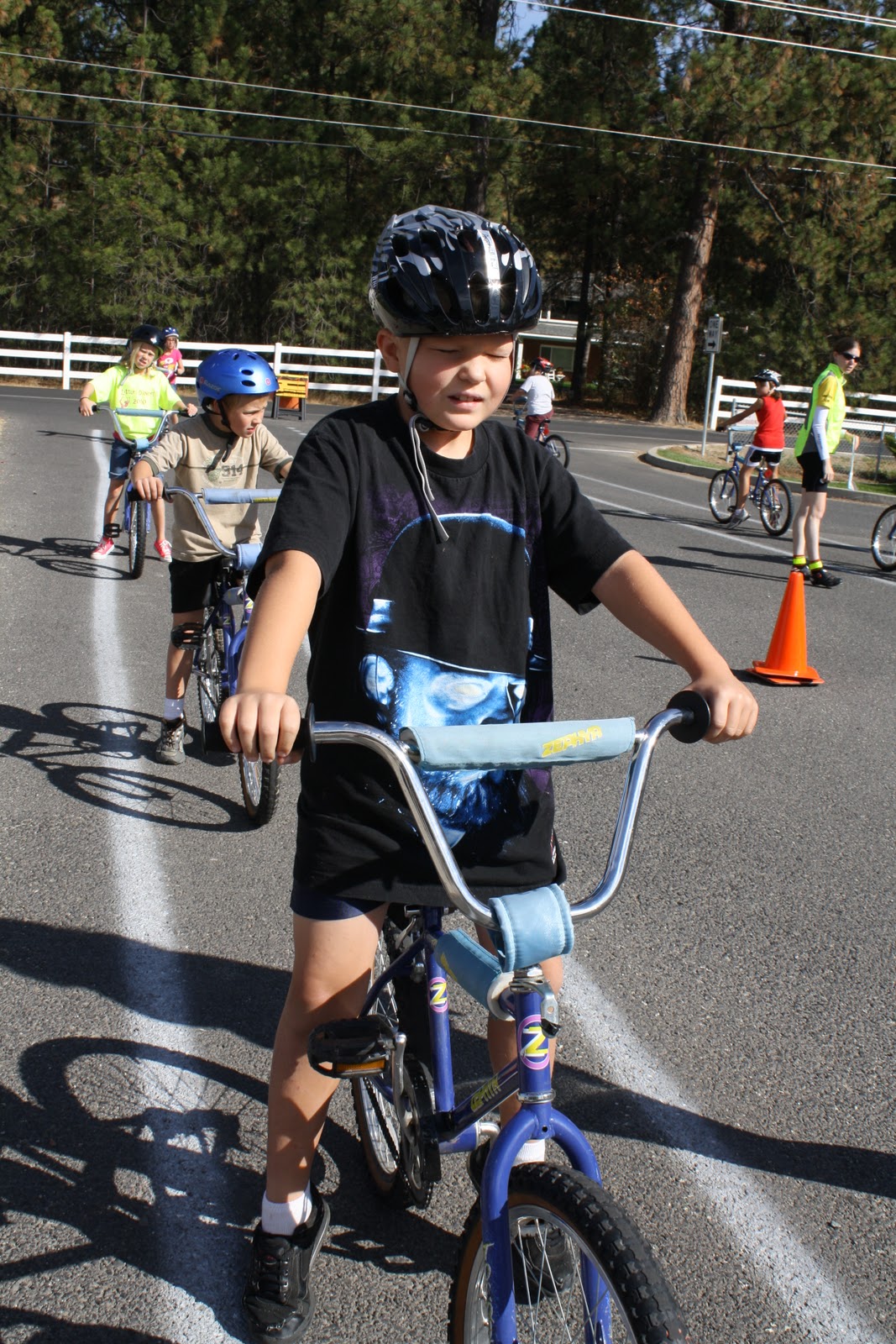
Kids are our best hope for the future. They’ll carry what they learn in childhood forward into adulthood, which is why cigarette companies are banned from marketing to children. Fortunately, no such stricture exists against teaching children how to bike for transportation, and I recently had the opportunity to observe some bike brainwashing education in action.

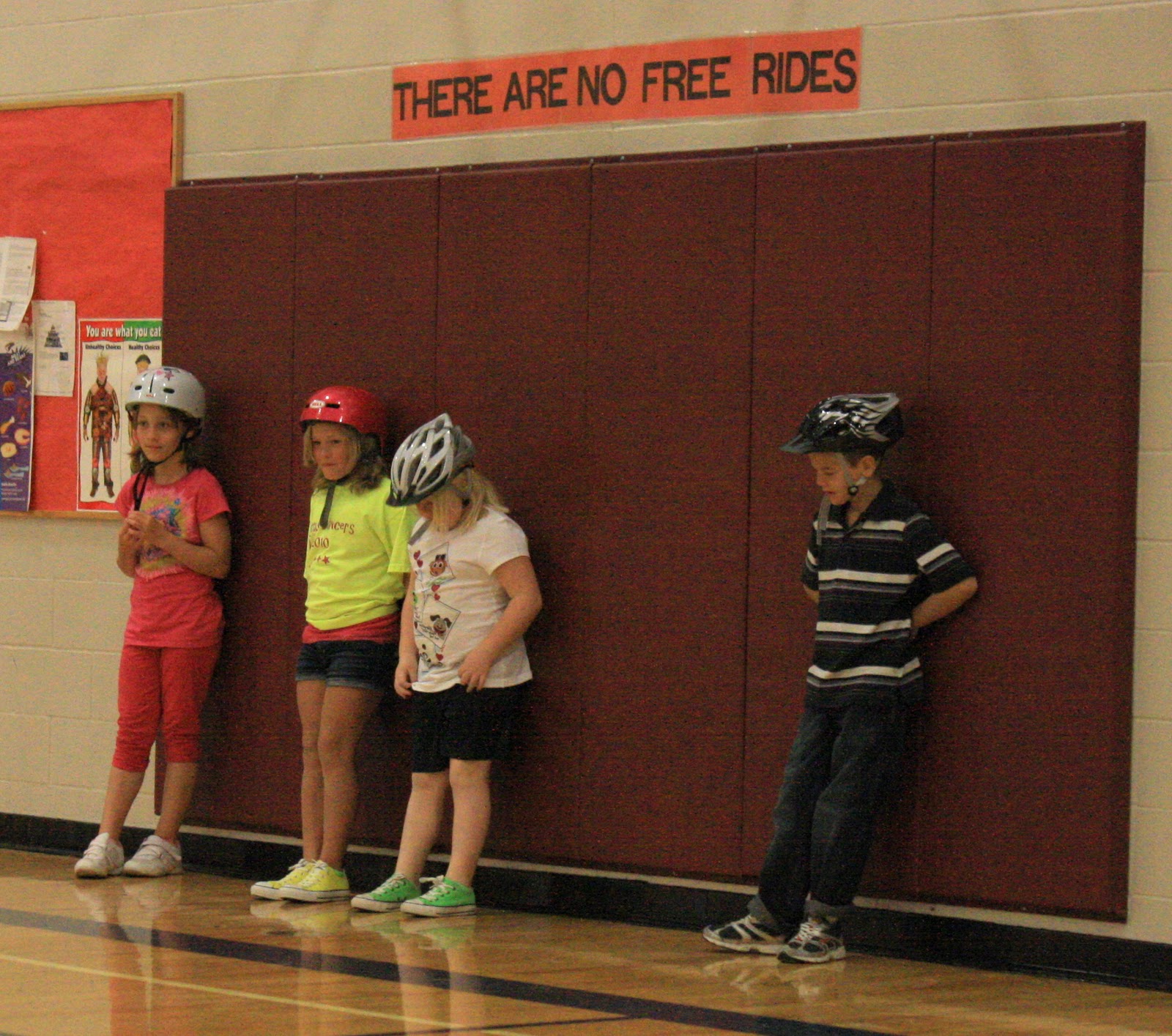
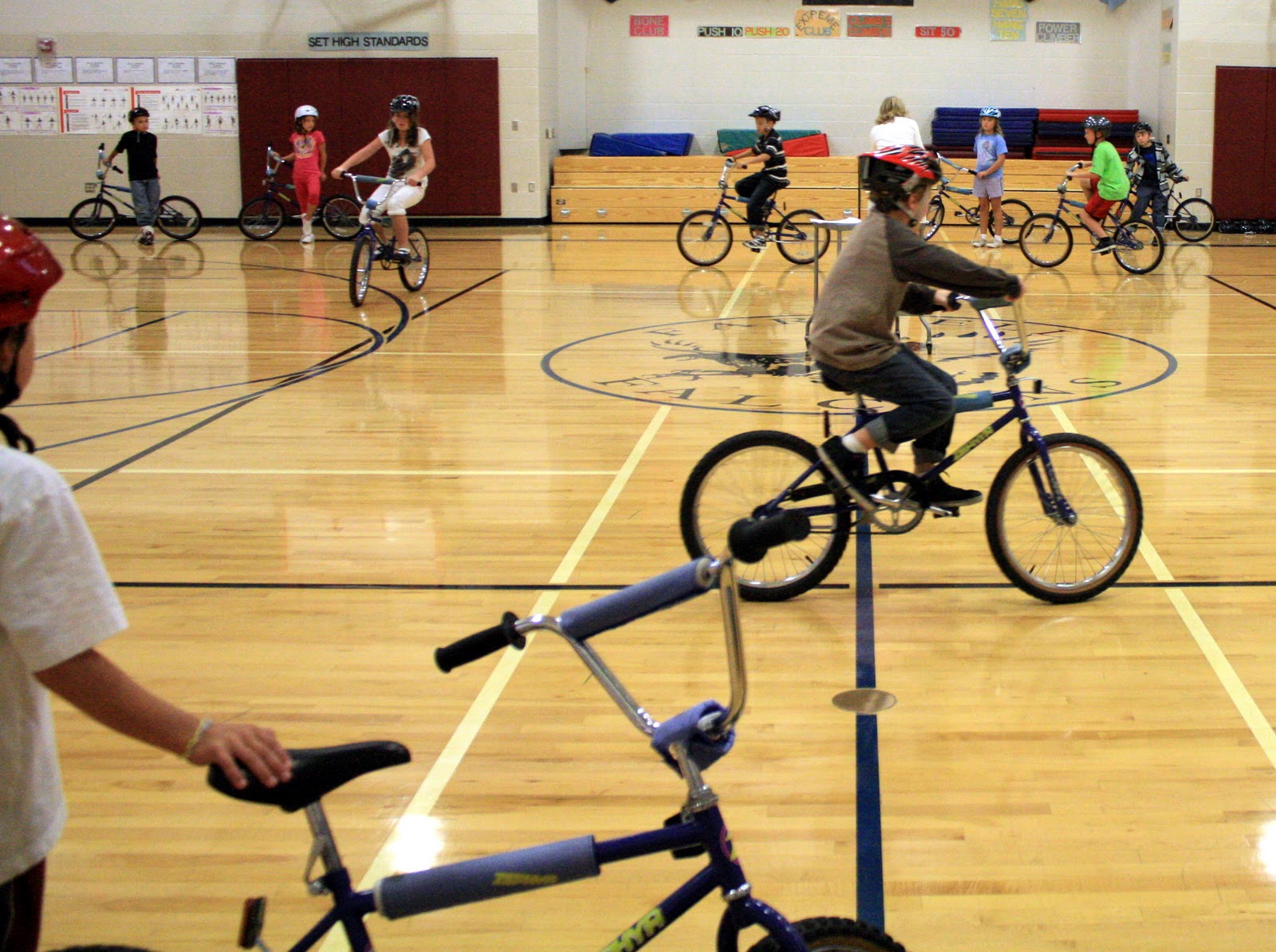
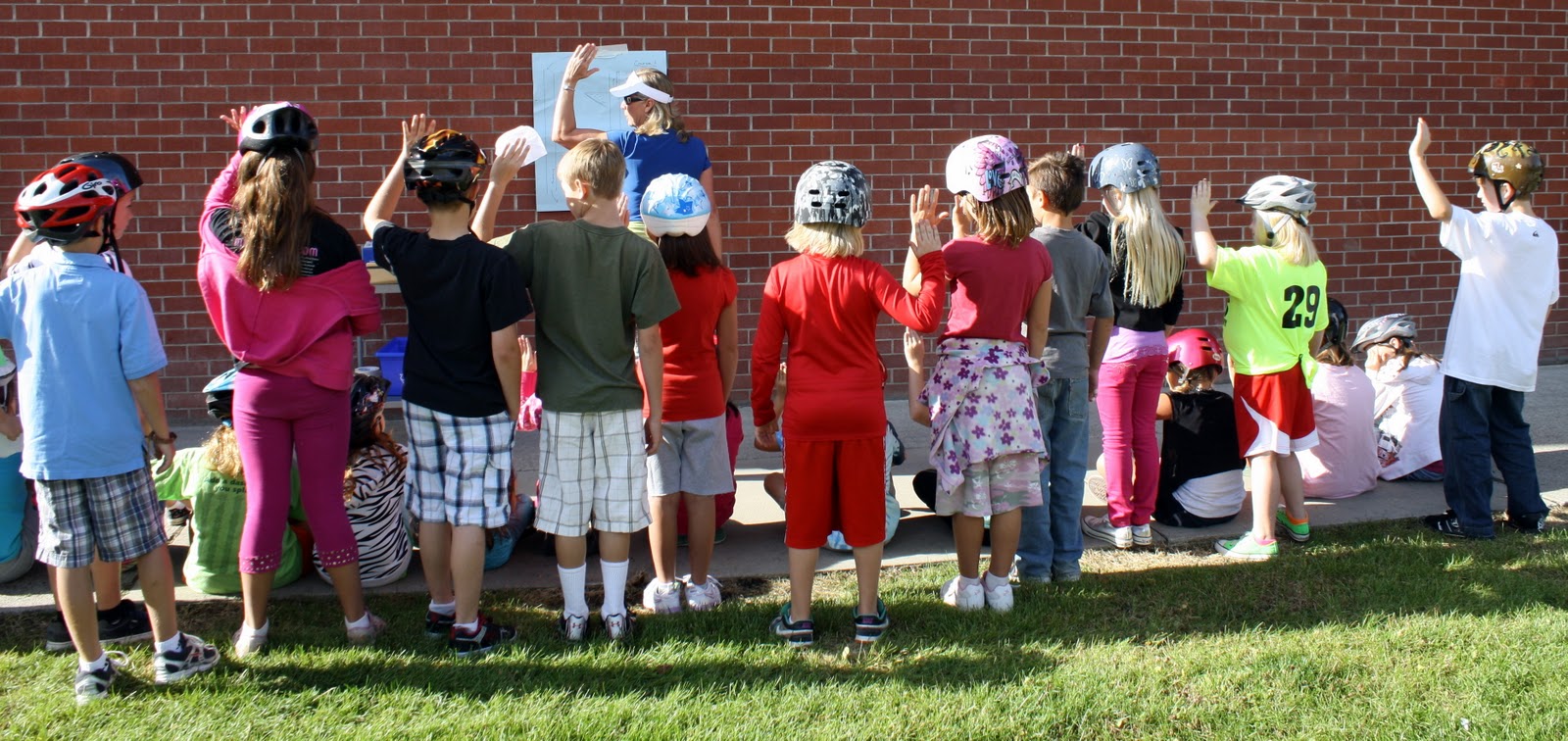
Eileen Hyatt, a board member who lives in Spokane, arranged for me to visit Farwell Elementary School for the week of September 13. There I had the pleasure of learning from Eileen and observing and assisting in Farwell’s week-long bike PE class. Here’s what I saw.

Kids learning how to keep their shoelaces from becoming safety hazards…

Kids being visible — or invisible — on a road-like background…

Kids learning how to stop quickly…

Kids learning (or not learning) how to signal turns…

Kids looking behind while riding straight…

Kids waiting their turns and communicating non-verbally on the “road”…

Kids cooperating as a team to avoid hazards on the “road” while all getting to their destinations safely…

Kids signaling their turns and positioning themselves appropriately in lanes…

And kids having fun!


…or not.

Based on what I saw in Spokane that week, I’d say the future looks pretty bright.

Posted in Commuting, Education, Kids, Safety, Spokane County | Comments Off on The Bright Bicycling Future

Location, location, location!

pedbikeimages.org/Dan Burd

In August, I wrote a post titled It’s all about the bike rack that examined features of a good bike rack.  Today’s post revisits the venerable bike rack, and explores things to consider when picking a location for it.

As a bicyclist, I am delighted to find a bike rack at my destination but, on occasion, I sometimes come across a bike rack that I cannot or will not use.  Why?  Because the bike rack has been poorly sited.


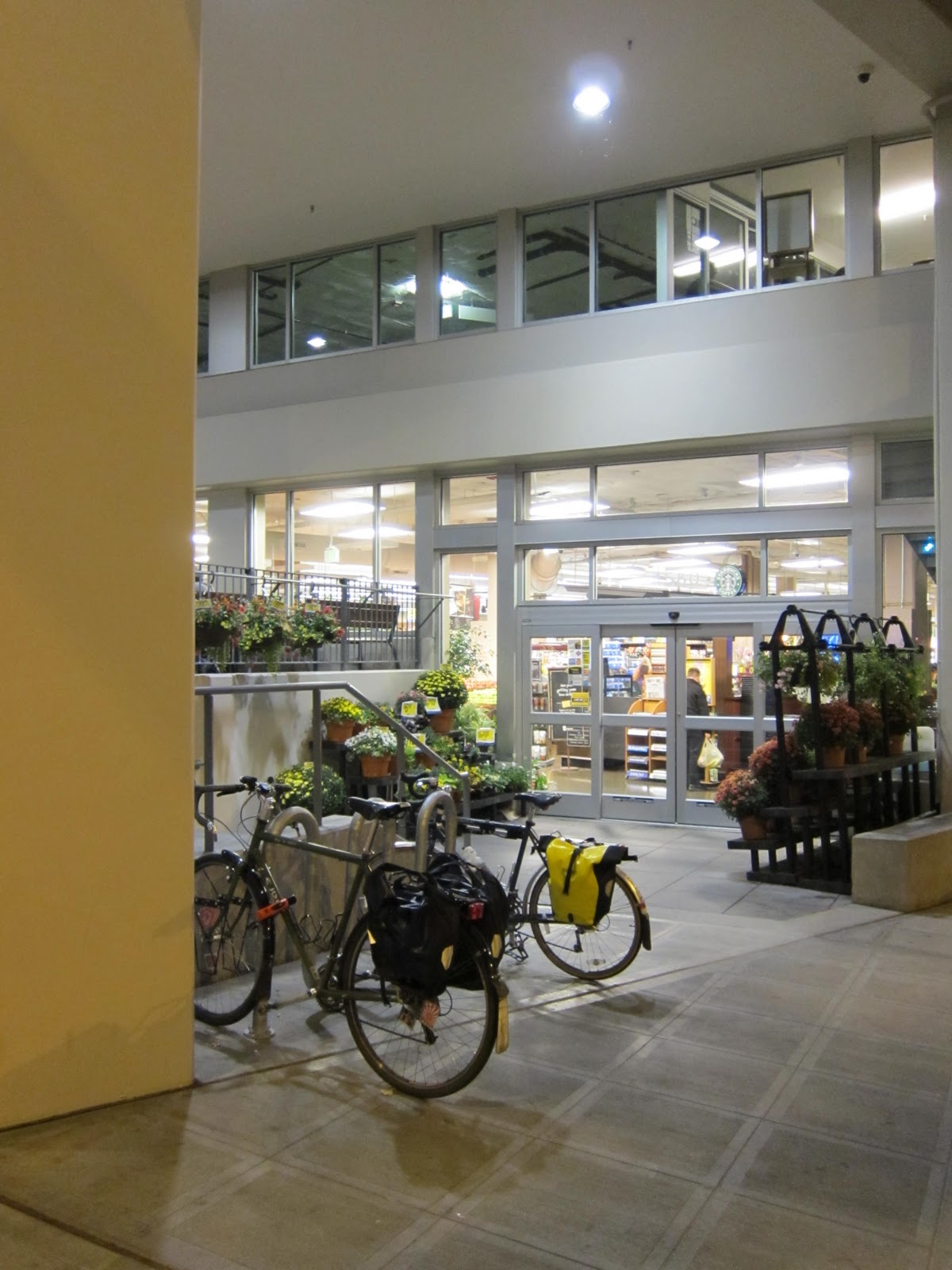
Easily spotted, covered, steps to the door.


Bike parking is a key factor in encouraging people to make trips by bike and where a bike rack is located determines whether and how much it will be used.  The bike rack pictured to the left is superbly located, in my opinion, and gets lots of use.  As a customer who arrives by bike, I feel welcome at this Seattle supermarket because the rack is located just steps from the entrance.  The bike parking is also protected from rain because it has been placed under the entrance covering.

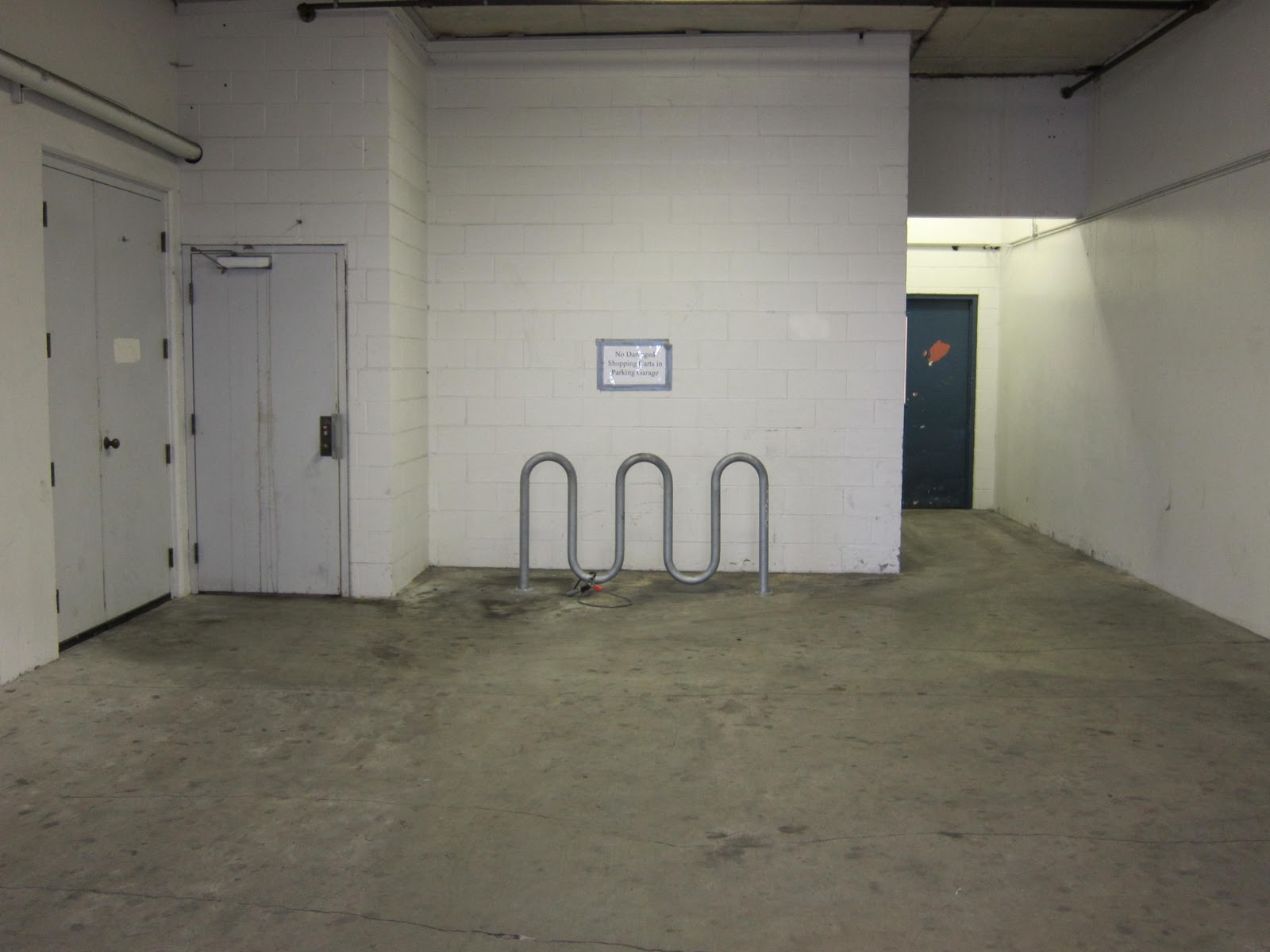
Hidden away, inconvenient, unused.


On the other hand, I have never used the lonely bike rack shown at the right.  This rack is hidden away in the parking garage of another grocery store and I suspect that few bicycle patrons of this business even know it exists.  To their credit, the store has since installed a bike rack at entrance level and steps from their door, and this particular rack is regularly used.

Here are more examples of well-sited bike racks at locations that serve people making trips by bike:

On-street corral, downtown Vancouver

Redmond Transit Center.

Now for some examples of poorly placed bike racks that see little or no use:

 
Redmond arterial next to parking lot.
Seattle commercial property, too close to landscaping and sprinklers.          
The Bicycle Alliance website has a section on bike parking, and includes our Retailer’s Guide to Implementing Effective Bicycle Parking and APBP’s Bicycle Parking GuidelinesThese documents offer guidance on selecting a well designed bike rack and recommendations on where to locate bike racks.
Bike rack needed here!
Posted in Bike Parking, Go By Bike | Comments Off on Location, location, location!

Auction: Food, Fun and Fundraising

Join us for our 18th Annual Auction on October 23!

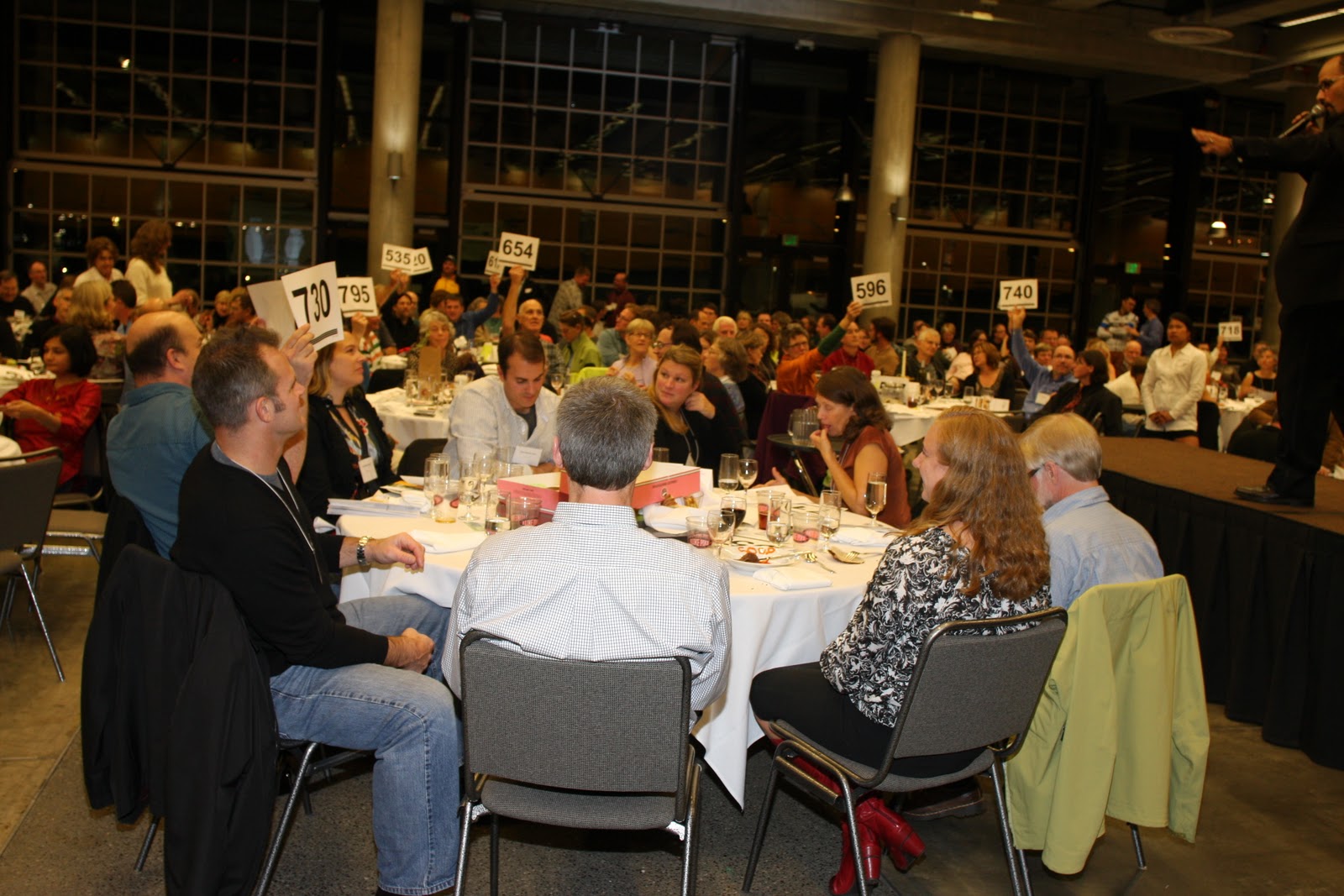
We hope you’re planning to join us at our 18th Annual Auction at Seattle Center Fisher Pavilion–and don’t forget that our early bird discount on tickets ends this Thursday, September 30! Ticket info and online form can be found at www.wabikes.org/auction. Your ticket price includes a family-style dinner and complimentary Northwest wines and beer.

This year’s auction is shaping up to be another memborable event! Eric Mamroth and Dave Ross are returning as our auctioneer and emcee respectively. The Dessert Dash will be bigger and better than ever. The Wine Grab is back by popular demand and we’re adding a Beer Grab as well.

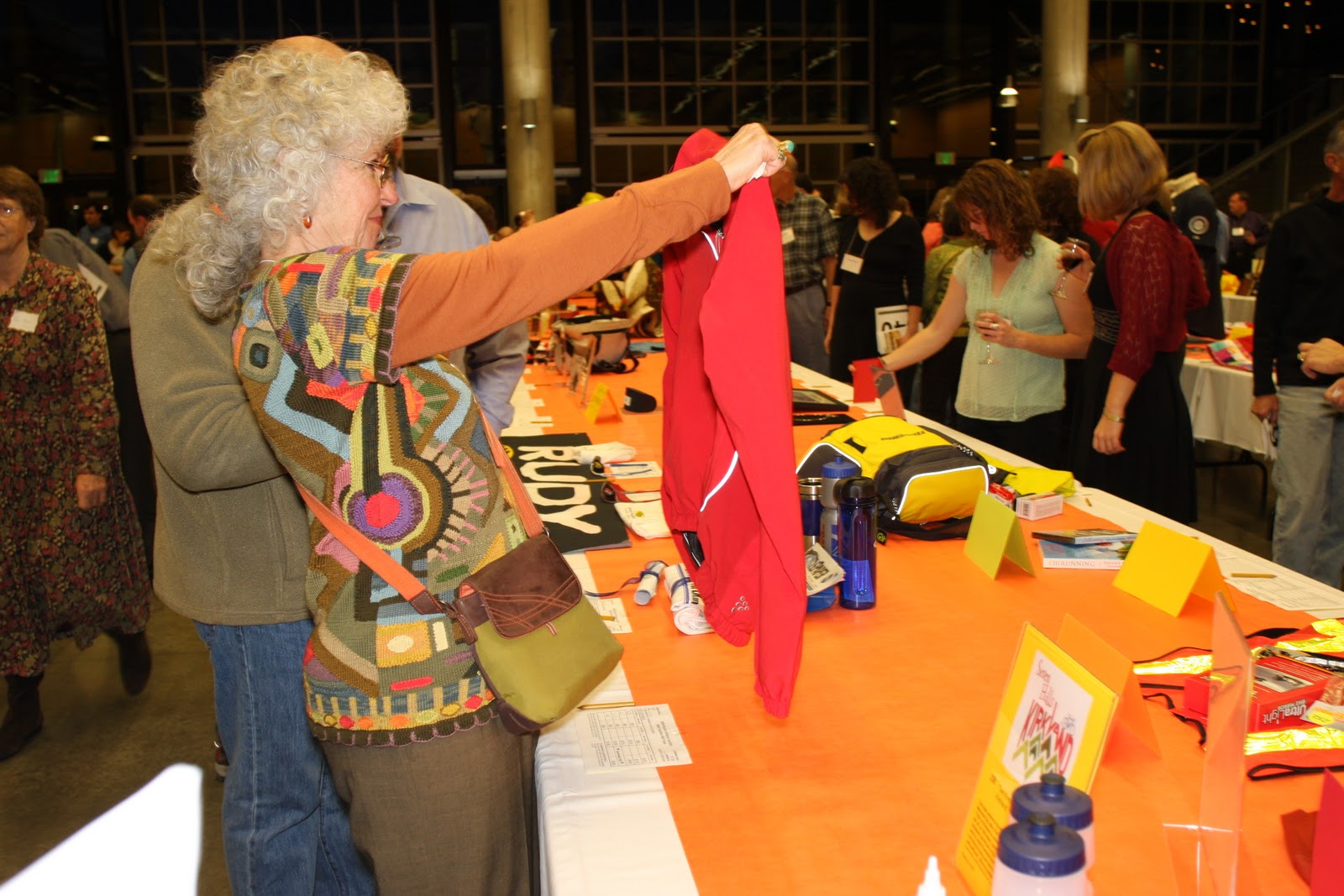
We’ve got some great auction items for your bidding pleasure, including an exclusive 5-day use of 51′ sailing yacht for up to 11 persons, a day of sport climbing with Doug Walker, a Mount Tahoma ski hut adventure, Cascade Bicycle Club 2011 passport, 4 tickets to Disneyland, a 5-day safari for 2 at Ezulwini Game Lodge in South Africa, cross-country ski gear, an REI camping package, an Inland Northwest railcycling adventure, a gourmet sushi dinner for 6, Sounder tickets, symphony tickets, massages and more!

We’re still accepting donations! Use our online donation form at www.wabikes.org/auction or contact Louise McGrody at 206.224.9252 x303 to discuss.

Volunteers are a key ingredient to the success of the auction! We need assistance with event set up and clean up, as well as help with a variety of tasks during the event. Contact Ron Lindsay, our auction volunteer coordinator, if you’d like to help out.

A big shout out to our event sponsors:

Third Place BooksVulcanBoeing – John Duggan, Cycling Attorney – SVR Design
REI Cyclists of Greater SeattleKat Marriner Graphic DesignH4 Consulting
Posted in Auction, Events | Comments Off on Auction: Food, Fun and Fundraising

I Bike: Izabelle Anderson

Izabelle proudly poses with her bike.

Although Izabelle Anderson of Bellingham is only 8 years old,  she has been riding her bike for “a hundred years.”  She proudly bikes to school on her pink bicycle decorated with flowers and equipped with a basket.

Biking is Izabelle’s favorite way to get to school.  She likes to bike because she gets exercise, has a lot of fun, and she likes to play on her bike.  Sometimes she even rides in the rain.

When asked what her first memories of biking are, Izabelle responded, “I remember that I got to look around when I was on the back of my Mom’s bike. I also remember crashing my bike when I had training wheels and I went too fast down a hill.”  The coolest thing she has seen from a bike seat is a raccoon.

Does she have any advice for folks thinking about taking up biking?  You bet.

“Always wear your helmet and be safe all the time. Wear hand gloves. Ride in a straight line, don’t go back and forth, back and forth because you might crash,” stated Izabelle.  ” I love to bike!” she adds.

Tell us your story!  I Bike is a project of the Bicycle Alliance of Washington to put a personal face on bicycling when we talk to elected officials and the public.  Contact Louise McGrody if you’d like to share your I Bike story with us.

Posted in I Bike, Kids, People, Whatcom County | 1 Comment

Want more people to bike? Feminize cycling!

I’m a woman and I make all sorts of trips by bike, including my work commute, but I’m in the minority in this country.  An October 2009 article by Linda Baker in Scientific American Magazine states that if you want to increase the level of bicycle transportation trips in the US then we need to get more women on bikes.


In the US, men’s cycling trips surpass women’s by at least 2:1.  This ratio stands in marked contrast to cycling in European countries, where urban biking is a way of life and draws about as many women as men–sometimes more.  In the Netherlands, where 27 percent of all trips are made by bike, 55 percent of all riders are women.  In Germany 12 percent percent of all trips are on bikes, 49 percent of which are made by women.

So why don’t American women bike more often?  Are we worried about the dreaded helmet hair?  Not really.  Are we trying to avoid sweating?  Nah.  Are we concerned about safety? BINGO.


pedbikeimages.org/Elly Blue

Earlier this year, the Association of Pedestrian & Bicycle Professionals (APBP) conducted an online survey about women and their attitudes and concerns about biking. Over 13,000 women responded to the survey, and the preliminary data confirms that women are concerned about their safety while biking on our city streets.  Respondents expressed concern about distracted driving (78%), speeding vehicles (69%), and vehicles turning right in front of them (61%).  Participants also wanted more bike lanes (69%) and more off road pathways (52%).

If we truly want to increase the number of Americans who bicycle, then it’s time to get women on bikes..  We need to listen to what women say keeps them from biking and address those issues.

New York City has made a significant investment in bike infrastructure, installing 200 miles of bike lanes over the past three years.  Now they are working to increase the number of women who bike for transportation.  The Streetfilms video Women in Motion: New Lady Riders Reflect on NYC Cycling interviews women new to cycling and explores what motivated them to try bicycling.


Posted in Attitudes, Bike Culture, Go By Bike, Infrastructure, Safety | Comments Off on Want more people to bike? Feminize cycling!

Pro Walk/ Pro Bike in TN!

PRO WALK PRO BIKE 2010

I had an amazing opportunity to attend Pro Walk/Pro Bike in Chattanooga, Tennessee last week (Sept 13-17). My work sent me and I spent the week trying to soak up as much new and exciting bike ped info I could. I can’t wait to get back into the office and put some of my new ideas to work!

I can’t tell you how exciting it was to be amongst hundreds of other bike nerds. We talked about bike education, encouraging women to ride, lessons learned and every time I told someone I worked for the local MPO they knew what I meant (that NEVER happens)! Metropolitan Planning Organization for those of you who aren’t in the transportation field.

From what I saw, Chattanooga is a cute town, they have a free electric shuttle bus that runs in the downtown core. I am pictured above on the pedestrian bridge that overlooks a beautiful park and the river. The aquarium was amazing! And don’t get me started on the food, oh my. We ate at Sticky Fingers twice, it’s a local bbq joint. Mellow Mushroom, a pizzeria, where I enjoyed a Fat Tire and a Shrimp and Sausage pizza. Aretha Frankenstein’s for breakfast, The Ice Cream Show….wait this is a bike blog, not a food blog? Sorry, I’ll get back on subject.

The week started off with the annual National Safe Routes to School Partnerships meeting. We went over their draft strategic plan and then broke into groups to discuss various topics. I went to the group that talked about institutionalizing bike education curriculum and found out what’s happening around the nation in the bike ed world.

I attended more sessions than I can remember right now, I have pages of notes and stacks of business cards. Whatcom Smart Trips had a poster at the event and I was lucky enough to be able to help ‘present’ at the poster session. This means that I stood by the poster and talked to people about our program and our successes.

Another highlight was meeting the Metal Cowboy, Joe Kurmaskie, I bought his new book, Mud, Sweat and Gears, and look forward to reading it. It tells the tale of a bike trip he took with his wife and kids.

One of the opening speakers, Gil Penalosa told us that the week was about ‘recharging our batteries’ and that it did! I may be a little jet lagged, but I’m still energized and excited!!

I could go on an on about the conference, but will stop. Just know that it was great and well worth the time and money. It is every two years, if you are in the transportation field weather paid or a volunteer I’d recommend attending.

Posted in Advocacy, Bike Culture, Education, Events, Safe Routes to School, Transportation | Comments Off on Pro Walk/ Pro Bike in TN!

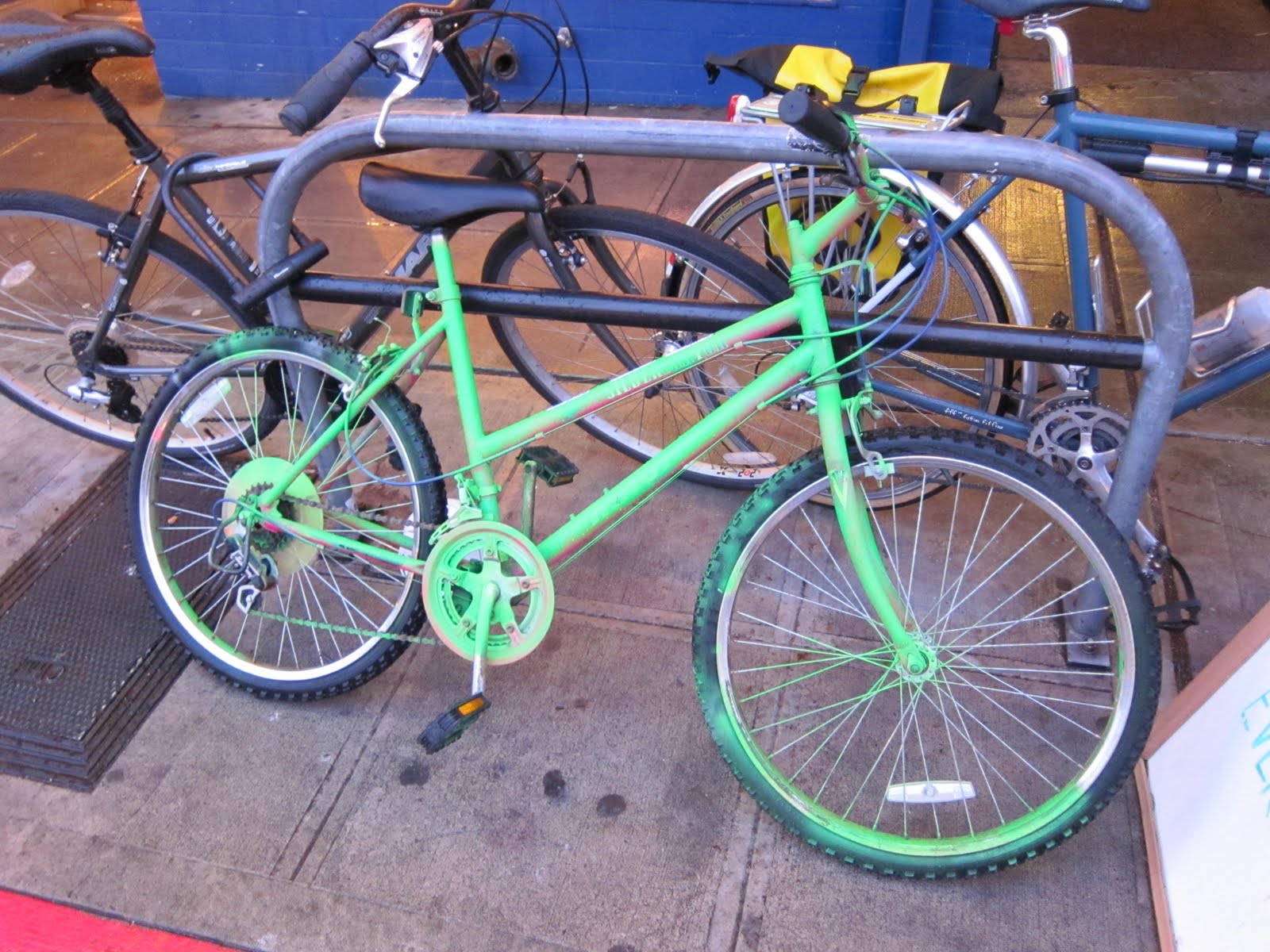
Green Bikes Invade West Seattle

If you take a stroll through the business districts in West Seattle these days, you’re likely to spot one or more bright green bikes propped against a bike rack.  These bikes are unlocked and beckon you to take them for a ride.  Really.
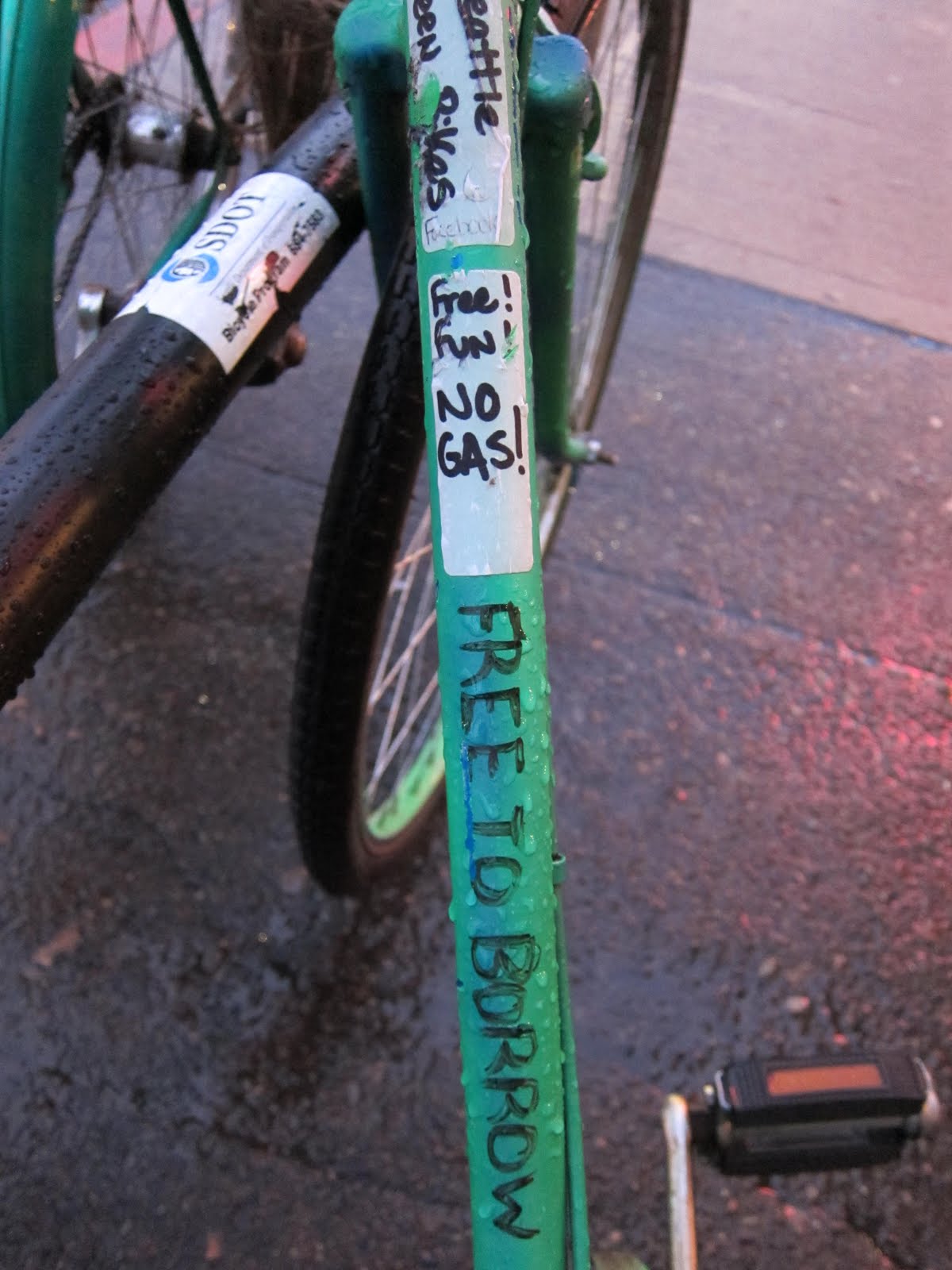
Free to borrow.
Please return.
Fun!
No gas!
Ride at your own risk.
These green bikes are a one-man public service by Guy Olson and he patterned it after the 1994 Yellow Bike Project in Portland.  Olson paints the donated bikes then puts them out in the neighborhood.  He also fixes them if someone reports that they are in need of repair.  More info can be found on the Seattle Green Bikes Facebook page.
Posted in Bike Culture, Go By Bike, Seattle, Sustainable Living | 2 Comments

I Bike: Suzanne Skinner

Suzanne astride “the Precious” with thanks to Bill Davidson.

Suzanne Skinner of Mercer Island began biking to work several years ago when her then employer, the City of Seattle, provided showers and a locker room that made transitioning from bike garb to professional wear a breeze.

She loved her bike commute because it felt long enough to be a work out and provided her with the training she needed to enjoy longer weekend recreational rides.  Her 50 minute commute helped Suzanne focus on the coming day in the morning and de-stress and regroup for whatever the family had in store for her in the evening.  What Suzanne didn’t expect was all the great people she met enroute.  Biking opened her eyes to the delightful neighbors she had overlooked when she drove or bussed to work.

“One morning I met an armed camp of elderly and incredibly fit Cantonese wielding drawn sabres while practicing tai chi along the bike path on the Mercer Island lid,” she recalled.  After responding with a startled “jo san” (good morning) to them, the group proudly demonstrated some of their best maneuvers for her.

On another early morning bike commute, Suzanne encountered “two lovely women madly hula hooping along the side of West Mercer Way.”  She stopped and received an impromptu hula hooping lesson that morning.

“One never gets to hula hoop on the way to work when one relies on a motor vehicle,” said Suzanne.  “Biking opens up new worlds and makes you laugh a bit more!”

Tell us your story!  I Bike is a project of Washington Bikes to put a personal face on bicycling when we talk to elected officials and the public.  Contact Louise McGrody if you’d like to share your I Bike story with us.

Posted in I Bike, People, Seattle | Comments Off on I Bike: Suzanne Skinner